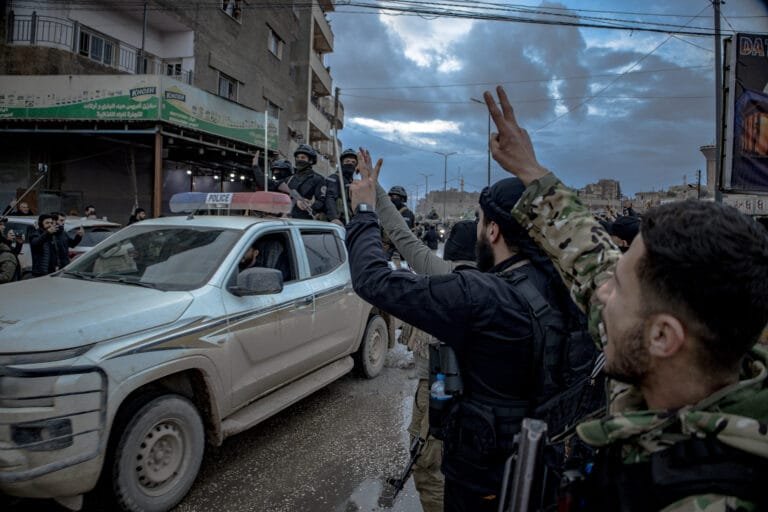
Damascus, Syria – In a seismic shift for the Syrian geopolitical landscape, Syrian Internal Security forces began their official entry into the city of Qamishli on February 3.
This movement marks the operational phase of a landmark agreement between the Syrian government and the Syrian Democratic Forces (SDF). It effectively signals the end of years of administrative fragmentation in the country’s northeast.
The entry into Qamishli follows a similar deployment in Al-Hasakah on February 2. These strategic maneuvers are the direct result of a comprehensive treaty signed on January 18 by President Ahmed al-Sharaa. This treaty mandates the permanent cessation of hostilities and the full integration of the SDF into state institutions.
The Architecture of the Agreement
The “January 18 Accord” serves as a blueprint for the restoration of state sovereignty over the Al-Jazira region (encompassing Al-Hasakah, Raqqa, and Deir ez-Zor).
The key pillars of the deal include administrative re-unification, which is the full merger of all civil institutions previously under the “Autonomous Administration” into the Syrian state’s legal and administrative frameworks.
Security and military integration involves the individual integration of SDF military and security personnel into the Ministries of Defense and Interior. Following security vetting, personnel will be granted official ranks and financial entitlements.
Resource sovereignty allows the Syrian government to assume full control over all international border crossings and the vital oil and gas fields in the region. Importantly, protection will be provided by regular army units.
Cultural recognition follows Decree No. 13, issued by President al-Sharaa on January 16, which formally recognizes Syrian Kurds as an “integral and original” part of the Syrian people. It enshrines their cultural and linguistic identity within the national framework.
A Community in Transition: The Christian Minority
Despite the diplomatic breakthrough, the atmosphere in the region is one of “cautious relief” tinged with anxiety. The Christian community—primarily Syriac-Assyrians and Armenians—has seen its numbers dwindle from 30% of the population in the mid-20th century to a mere fraction today.
Bashir Ishaq Saadi, Deputy Head of the Assyrian Democratic Organization (ADO), noted that while the agreement has quelled the immediate fear of a scorched-earth military confrontation, concerns remain regarding hate speech and social cohesion. “Our position remains steadfast: we support political solutions and the sovereignty of the state over all Syrian geography,” Saadi told Asharq Al-Awsat.
Current estimates suggest the Christian population in the Jazira region has plummeted from 170,000 before the conflict to roughly 40,000. In the Khabur region, once home to 15,000 Assyrians, only 800 remain. Local leaders, including Archbishop Mar Maurice Amsih, have called for neutrality and a peaceful transition to prevent further displacement.
The Washington Pivot: A New Realpolitik
The implementation of this deal reflects a dramatic reversal in US foreign policy. Under the administration of President Donald Trump, Washington has moved away from supporting Kurdish “autonomy” in favor of a unified Syrian state under President al-Sharaa.
Analysts suggest this shift crystallized during President al-Sharaa’s visit to the White House in November 2025. By December, the US began applying direct pressure on SDF leadership to accept integration. They viewed the previous status quo as an obstacle to long-term regional stability. Moreover, a critical component of this transition involves the transfer of 29 detention centers—holding roughly 10,000 ISIS fighters and 40,000 women and children—to Syrian government control. This may potentially unblock the diplomatic impasse regarding the repatriation of foreign nationals.
Regional Reactions: A Rare Consensus
The agreement has garnered widespread support from regional powers, albeit for varying strategic reasons.
Turkish President Recep Tayyip Erdoğan warned against any attempts to “sabotage” the deal, stating that Turkey supports any step that ensures Syria’s territorial integrity and domestic peace.
The Iraqi Foreign Ministry welcomed the “comprehensive agreement,” highlighting Baghdad’s role in facilitating the dialogues that led to the ceasefire.
Saudi Arabia expressed its support for the Syrian government’s efforts to maintain sovereignty and praised the mediation efforts of both Saudi Arabia and the United States in stabilizing the region.
The northeast of Syria is populated by many different religious and ethnic groups. The Kurds are a sizable community, but they are a minority. When the Kurds became supported by the US military in the past fight to defeat ISIS, the Kurds became emboldened.
The US never promised them a homeland. But, the Kurdish leaders aspired to an autonomous governmental system, and they established a Marxist system known for gender equality. Now, they have to merge with Damascus.
For Kurds
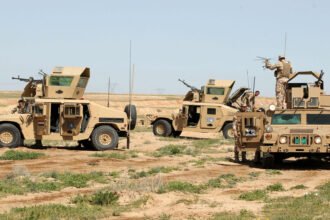
For Kurds under “Rojava” they enjoyed the benefits of being supported by the world’s super power. But, for the non-Kurdish majority of the region, the story was different. Many felt the injustice of having their farms, homes and businesses taken away by armed militias. These militias were driving American military vehicles and brandishing American weapons.
Now the pendulum has swung the other way. For the sake of peace and security, the Kurds need to dust off their Syrian identity and fit into society once again. Meanwhile, the non-Kurds need to put aside past grievances and the lure of revenge. Syria is a large country, and there is more than enough room for everyone.
As Syrian flags are raised over government buildings in the northeast, the focus now shifts to the logistical complexities of merging two distinct bureaucracies. In addition, there is the humanitarian challenge of stabilizing a region scarred by a decade of conflict.