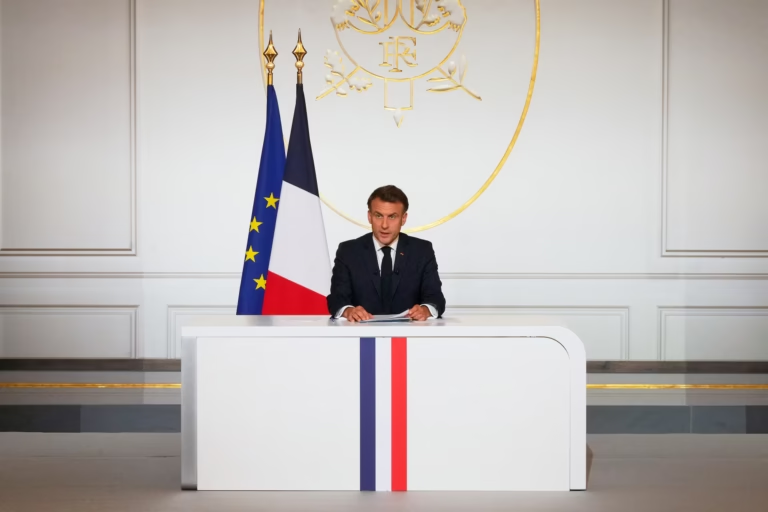
Paris, France – French President Emmanuel Macron’s veto of the free trade agreement between the European Union and the Mercosur bloc has reignited the debate within European circles. Paris is leading an opposition front that believes the agreement, in its current form, poses serious economic and environmental risks.
French concerns center on the agricultural sector. The government fears an influx of agricultural products and meat from South American countries at lower prices. This would place European farmers, particularly French farmers, at a disadvantage due to differing environmental and health standards between the two sides.
France also bases its rejection on environmental considerations. It argues that the agreement lacks clear and binding commitments to protect forests, especially the Amazon rainforest. Furthermore, the agreement does not guarantee that Mercosur countries will uphold their climate commitments under the Paris Climate Agreement.
Politically, Macron’s stance reflects growing domestic pressure from agricultural unions and political forces. These groups view the agreement as a threat to food security and economic sovereignty. This is why Paris is taking a hard line on any move to open markets without sufficient guarantees.
In this context, France is working to coordinate its position with other European countries that have reservations about the agreement, such as Austria and Poland. The aim is to renegotiate its terms or introduce fundamental amendments that ensure the protection of European interests. Conversely, some countries see the agreement as an opportunity to strengthen European influence in Latin America.
Between conflicting economic interests and environmental and political considerations, the future of the Mercosur agreement remains uncertain. Everyone is waiting for a European consensus that balances trade liberalization with protecting producers and the environment within the Union.