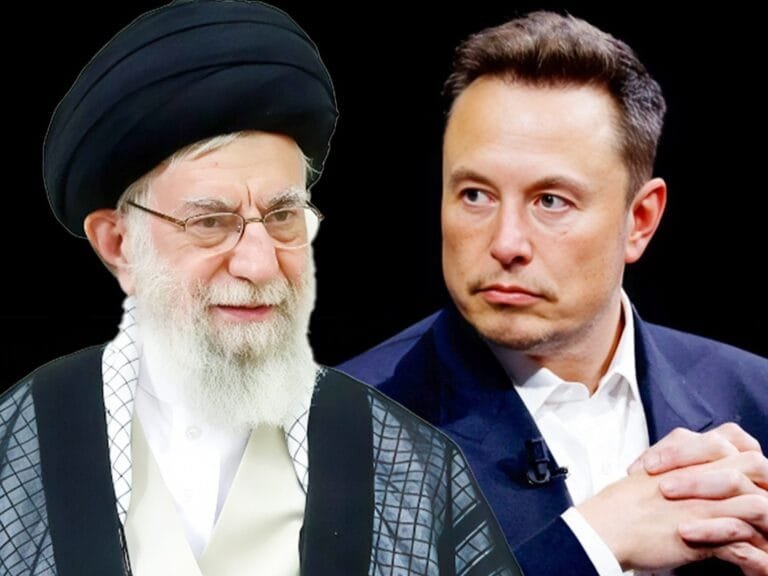
Tehran, Iran – A brief exchange, limited in its wording but significant in its implications, sparked considerable controversy on the X platform. Iranian Supreme Leader Ali Khamenei engaged in an indirect linguistic sparring match with Elon Musk, the platform’s owner. This stemmed from political tweets posted by both men in different languages, opening the door to numerous political and media interpretations.
The incident began when Khamenei posted tweets in English addressing general political issues. Among these was his rejection of what he described as external pressures and attempts to impose will on his country, asserting that Iran “will not surrender” to what he called its enemies. These tweets, which Khamenei has a habit of posting in multiple languages to reach an international audience, garnered widespread attention and significant engagement.
However, what was striking was Elon Musk’s entry into the debate. He responded to one of Khamenei’s tweets with a short phrase in Persian, which was interpreted as questioning or downplaying the message’s content. Observers considered this an unusual precedent for a social media platform owner to make regarding a political leader.
Observers believe that the exchange, despite its concise linguistic nature, reflects the overlap between politics and the management of digital platforms. This is especially true given the ongoing controversy surrounding Apple’s policies after Musk’s acquisition of the company, and his championing of “freedom of expression,” even with internationally controversial figures.
This interaction comes within the broader context of political tensions between Iran and the United States, with Tehran subject to Western sanctions. Digital platforms are facing increasing pressure regarding their handling of accounts belonging to leaders of countries under sanctions or accused of human rights violations.
Reactions to the exchange varied. Some saw Musk’s response as reflecting a personal stance or a new management philosophy for the platform, while others considered it merely a symbolic interaction amplified by the sensitivity and political and media influence of the parties involved.
Analysts emphasize that the incident highlights the transformation taking place on social media. It is no longer simply a platform for expression, but rather an open arena for the intersection of politics, language, and influence, in a world where a short tweet can ignite a broad global debate.