Washington, USA – US President Donald Trump announced that the United States is experiencing an unprecedented decline in crime rates, coinciding with record levels of employment.
He attributed this to the strict policies adopted by his administration to secure the borders, particularly on the country’s southern border.
Crime rates at their lowest levels
Trump said in a post on his social media platform, Truth Social,
that “crime rates in the United States have reached their lowest levels ever.”
He asserted that this decline is largely due to what he described
as the most successful security operation on the southern border in history.
The US president added that the labor market had seen a remarkable improvement,
with job opportunities being created at unprecedented rates.
He argued that tightening controls on illegal immigration contributed directly
This will create more jobs for American citizens and reduce pressure on public services and the labor market.
Immigration policy control
In this context, Trump pointed out that his administration had previously
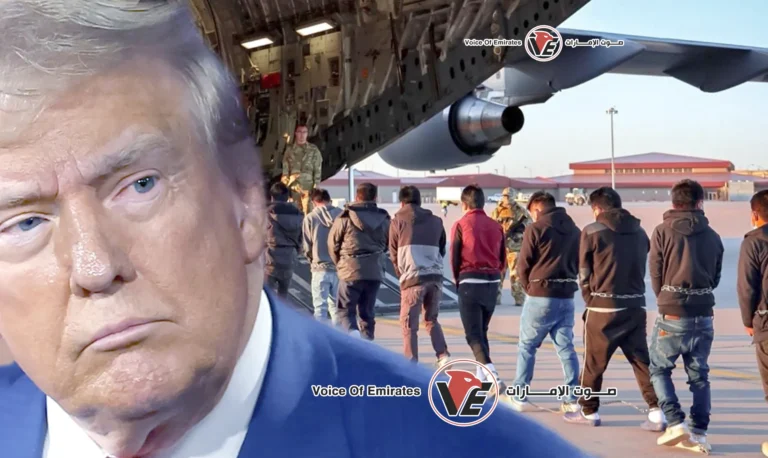
launched a large-scale program to deport illegal immigrants,
This is part of a comprehensive plan aimed at resetting immigration policies
and strengthening internal security.
He claimed that border patrol officials had not recorded any illegal entry
attempts into the United States for several consecutive weeks.
This was considered evidence of the effectiveness of the procedures followed.
Reverse migration
Trump also introduced a new concept called “reverse migration,”
which is based on illegal immigrants leaving the United States,
either voluntarily or through forced deportation.
In response to a question from journalists about the meaning of this term, he said:
“This means getting the foreigners out of our country. I want them out.”
Trump’s remarks come as part of an escalation in his rhetoric on immigration,
which is one of the main pillars of his domestic policies.
This comes amid widespread debate within American political and human rights circles
about the repercussions of these measures on society, the economy, and human rights.