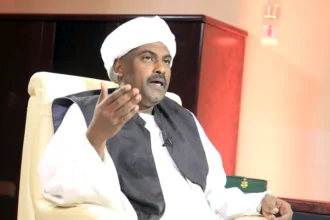
Tehran, Iran – Mohammad Gholzari, secretary of Iranian government media council, stated that the widespread protests that erupted in November 2019 left a profound impact on the country’s decision-making institutions;
These events led to a state of hesitation to the point that “no one dared to make a similar decision afterward.”
As a result, Gholzari warned that if this stalemate continued,
Iran would turn from a gasoline-exporting country into a gasoline-importing country.
Challenges in the energy sector
Commenting on the current government’s decision to raise prices,
the Iranian official explained that the experience of Bloody November
It was not just a passing event, but became a psychological
and political barrier hindering any progress on the energy file.
Despite the increasing challenges facing the fuel sector both domestically and internationally,
However, fears of a repeat of past scenarios continued to dominate the scene for years.
From secrecy to transparency: a new strategy
On the other hand, Gilzarry stressed that the recent price increase
decision was characterized by an unprecedented degree of transparency.
He completely denied the rumors about it being taken in secret.
Instead, he stressed that the decision “was not secret at all,” as it had been circulated publicly.
Among citizens, economists, and social media activists before its official approval,
This represents a shift in the government’s approach to sensitive issues.
Community engagement as an economic necessity
Furthermore, Gilzare considered the fundamental difference
between 2019 and now to be in the “philosophy of communication” with society;
Public debate on economic policies has become an absolute
necessity under the complex circumstances.
Accordingly, the Secretary of the Media Council believes that the current
approach aims to absorb shocks through prior dialogue.
Listening to marginalized groups
In discussing the social dimensions, the Iranian official stressed the need
“Adjusting one’s ears to the voice of those who have no voice” to understand the true extent of the problems.
He explained in this regard that these crises may be the result of cumulative errors,
Or as a direct result of external pressures and imposed sanctions,
This requires a delicate balance between reform and social justice.
Summary of the economic landscape
In conclusion, these statements come at a sensitive time
when the Iranian government is trying to walk a tightrope;
On the one hand, it seeks to implement necessary economic reforms,
On the other hand, it is struggling to avoid the outbreak of new
waves of popular protests that could threaten internal stability.