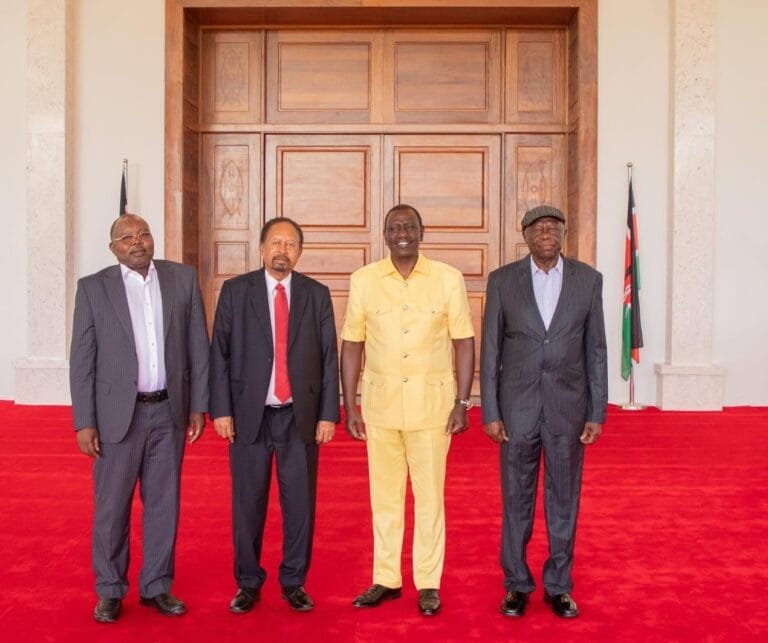
Khartoum, Sudan – In a political move that is the most prominent to unify the civilian front, political and civil forces within the “Steadfastness” alliance, headed by Abdullah Hamdok, signed an agreement on December 16, 2025 in the Kenyan capital, Nairobi.
Declaration of Principles jointly with the Sudan Liberation Army Movement led by Abdul Wahid Muhammad al-Nur and the Baath Party (Original).
This step is primarily aimed at stopping the Sudanese bloodshed and forming a broad front capable of determining the country’s political future.
Eradication of the Islamic movement: the most stringent clause
On the main points, the declaration included a crucial clause calling for the complete end of the Islamic movement’s existence.
The signatories classified the National Congress Party and its fronts as terrorist organizations.
Accordingly, the coalition stressed the need to permanently exclude this movement from any future political process.
This is in order to block any attempt to reproduce the old system that undermined the state for decades.
Humanitarian track and urgent truce
As for the situation on the ground, the Declaration of Principles made an immediate end to the war a top priority.
Calling for a comprehensive ceasefire for three months.
It is worth noting that this proposal is linked to opening urgent humanitarian corridors to provide relief to those affected.
In parallel, paving the way for a comprehensive political process to rebuild the state.
From this standpoint, the signatories stressed their complete rejection of any military solution.
They believe that the civilian option is the last resort to save Sudan from collapse.
State-building: One army and civilian authority
Moreover, the declaration outlined a clear vision for the new Sudan;
It aimed to build a democratic civil state based on equal citizenship.
In a crucial step, the signatories called for the establishment of a single, professional national army under civilian authority.
With a complete restructuring of the security system to ensure that military coups and civil wars do not recur.
Broad coalition and diverse representation
In contrast, the list of signatories was characterized by great diversity, including historical parties such as the “National Umma” and “Baath” parties.
Armed movements, and human rights organizations such as the “Darfur Lawyers Association”.
In conclusion, despite the widespread welcome the agreement received as a serious attempt to unify ranks,
However, it still faces field challenges related to the extent to which the warring parties respond to this ambitious civilian initiative.