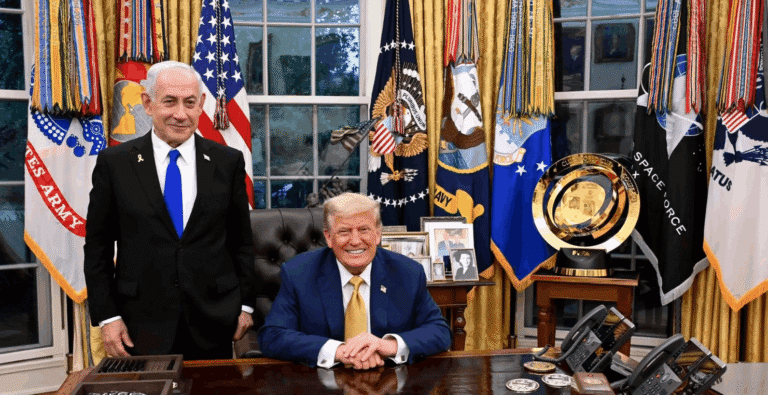
Tel Aviv, Israel – CNN, citing an informed Israeli source, reported that US President Donald Trump and Israeli Prime Minister Benjamin Netanyahu spoke by phone on Monday. They discussed key issues including developments in Gaza, Iran, Lebanon, and Syria.
According to reports, the US president extended an invitation to Netanyahu on December 1st to visit the White House again in the “near future.” If the visit takes place, it will be the fifth meeting between the two leaders during Trump’s second term.
Gaza and expanding peace agreements
The Times of Israel confirmed that both sides emphasized “the importance and commitment to eliminating Hamas’s military capabilities and disarming the Gaza Strip.” They also discussed “expanding peace agreements” in the region.
CNN reported that the call also touched on Netanyahu’s request for a pardon, without providing further details.
Syria: Clashes, US warning, and future prospects
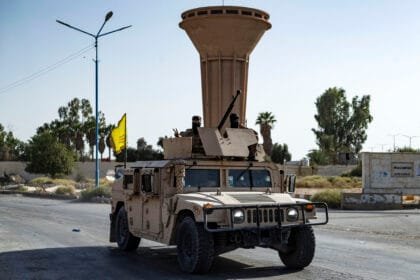
The call came after reports of clashes between Israeli forces and militants in southern Syria. In this context, Trump stressed the importance of maintaining stability in Syria.
Trump’s message: Trump wrote on the Truth Social platform on Monday that “it is very important that Israel maintain an effective dialogue with Syria. And that nothing should happen that would prevent Syria from becoming a prosperous country.”
Satisfaction with the “results”: The US president announced that Washington is satisfied with “the results achieved in Syria.” He also stated that his administration has used “all its power to promote the reconstruction process in that country.”
Lifting sanctions: Trump indicated that lifting the “very harsh and stinging” sanctions had “greatly helped Syria.” He expressed his belief that this action was appreciated by “Syria, its leadership, and its people.”
Calling for a “long-term relationship”: Referring to Syrian interim President Ahmed al-Sharaa, Trump said he is “working hard to achieve positive developments.” He added that this situation could pave the way for “a long-term and successful relationship between Syria and Israel,” describing the situation as a “historic opportunity.”
Syrian commitment and Israeli intransigence
For his part, Tom Barrack, the US Special Envoy to Syria, announced that Damascus would cooperate “actively” with the United States. This cooperation would focus on confronting the remnants of ISIS, the Iranian Revolutionary Guard, Hamas, Hezbollah, and other “terrorist networks.” Syria would also be a partner in global peace efforts.
In response, a Syrian Foreign Ministry official stated on Sunday that the country wants guarantees from Israel. It also demands a halt to attacks and infiltrations into Syrian territory. He indicated that the security agreement between Syria and Israel is “unworkable” as long as the attacks, which he said are aimed at weakening Syria, continue.
On December 28, Israeli officials announced that they had no intention of withdrawing from the areas they control in Syria, including the Hermon Heights. They also confirmed that they saw no prospect of reaching an agreement with Damascus in the near future.