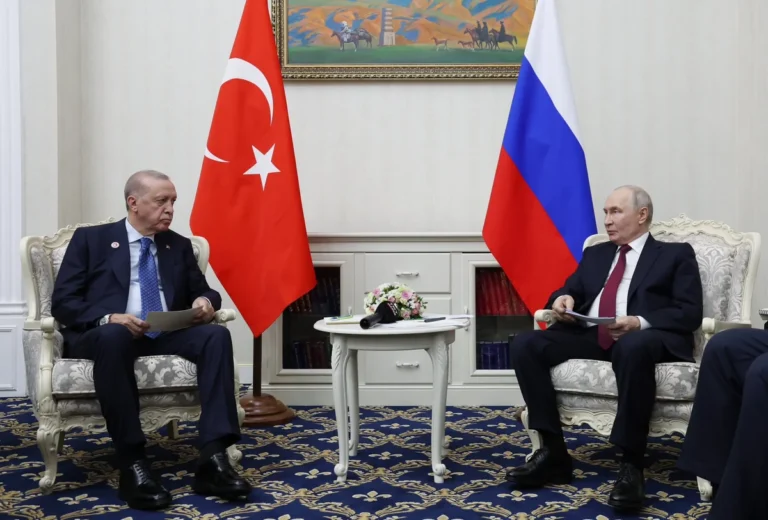
Bishkek, Kyrgyzstan – Turkish President Recep Tayyip Erdogan announced that his country will take concrete steps in cooperation with Russia to implement new power generation plant projects. These remarks came following a bilateral meeting with Russian President Vladimir Putin on the sidelines of the Shanghai Cooperation Organization summit in Bishkek. Consequently, Ankara seeks to expand its strategic partnership with Moscow across the energy sector to boost electrical capacity.
Speaking during his meeting with Putin on Tuesday, Erdogan stated that Turkey intends to move forward in strengthening bilateral energy cooperation with Russia. The Turkish President highlighted the possibility of launching new power plants following the inauguration of the Akkuyu Nuclear Power Plant. As a result, these steps reflect Turkey’s drive toward building an extended cooperation model that enhances national energy security and covers growing domestic demand.
Akkuyu as the Centerpiece of Nuclear Cooperation
The Akkuyu Nuclear Power Plant stands as one of the most prominent economic and scientific partnership projects between Ankara and Moscow in recent years. The Turkish government aims to leverage this milestone to expand its self-reliance and diversify its traditional and clean energy mix. Furthermore, this project serves as a major driver for bilateral trade ties, along with joint investments across critical infrastructure sectors.
These developments unfold as Turkey works to keep pace with rising domestic electricity demand and support comprehensive development plans. For their part, both leaders continue to review bilateral and regional cooperation files during their periodic summits. At the same time, energy issues retain their central position as one of the key pillars of economic partnership between Turkey and Russia today.
Future Prospects for Expanding the Partnership
Ultimately, statements by the Turkish President indicate that nuclear and electrical energy partnerships could experience tangible expansion over the upcoming period. These future steps are expected to encompass new projects relying on Russian expertise and Turkish operational capacity. Consequently, the economic and nuclear file remains strong proof of the robust bilateral ties and mutual understandings existing between Ankara and Moscow.