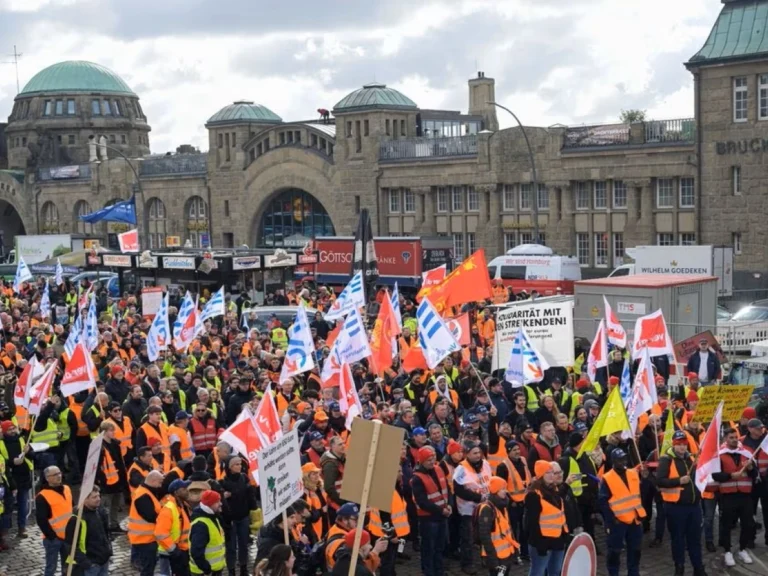
Berlin, Germany – Germany is witnessing a new and escalating wave of strikes in the trade sector amid deepening disputes between labor unions and employers over wage increases and better working conditions. This move threatens to cause widespread disruption to wholesale and retail operations in the coming days.
Calls to Expand Strikes
The German labor union has called on employees in major supermarkets and distribution centers to carry out new strikes. This aims to put strong pressure on company owners to present better offers in the ongoing wage negotiations, following the failure of previous rounds to reach a mutually satisfactory agreement.
A Vital Sector Under Pressure
The trade sector is one of the largest economic pillars in Germany, providing jobs for approximately 5.2 million employees. This massive scale means that any widespread work stoppage will have a direct and immediate impact on supply chains and market dynamics, especially given the ongoing economic challenges facing the country.
The Gap Between Worker Demands and Employers
Labor unions are demanding salary increases that align with the rising cost of living and inflation rates, alongside improvements in the work environment to preserve workers’ purchasing power. Conversely, employers’ associations warn that fully meeting these demands would impose a massive financial burden on companies, citing slowing economic growth and high operating costs.
Awaiting the Resumption of Negotiations
All eyes are on the upcoming rounds of negotiations set to resume in the coming days, amid growing fears that the strikes could broaden if the deadlock persists. Such a scenario could deal a heavy blow to trade activities and supply chains in the European Union’s largest economy.