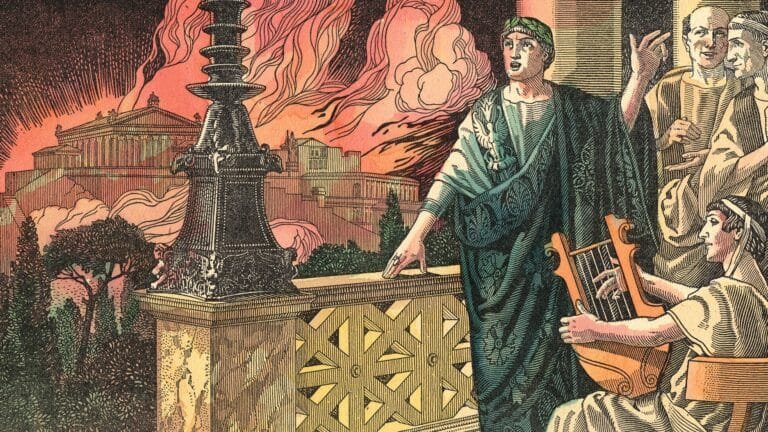
Cairo, Egypt – Emperor Nero is a highly controversial historical figure. Consequently, his name was linked to ancient tyranny. Moreover, he became a symbol of absolute dictatorship. As a result, debates renew on his death anniversary. Thus, his story remains a focus for historians today.
The Early Rule of Emperor Nero in Rome
This controversial ruler was born in 37 AD. Accordingly, he reached power in 54 AD. He became the youngest emperor to rule ancient Rome. Initially, the empire witnessed relative stability through advisors. However, Emperor Nero changed his policy completely later. He began eliminating his opponents and allies ruthlessly.
Emperor Nero and the Controversial Great Fire
The Great Fire in 64 AD links to him. On the other hand, historians dispute his direct responsibility. Nevertheless, stories spread accusing him of intentional arson. Consequently, the fire destroyed vast parts of the city. In addition, it caused massive human and material losses. Therefore, Emperor Nero initiated highly expensive reconstruction projects.
The Tragic End of Emperor Nero and His Fall
These urban projects burdened the population significantly. In contrast, popular discontent and anger increased against him. As a result, rebellions expanded across the vast empire. In 68 AD, military leaders rebelled against his rule. Thus, the grip of Emperor Nero weakened gradually. Ultimately, he committed suicide to end his dynasty tragically.