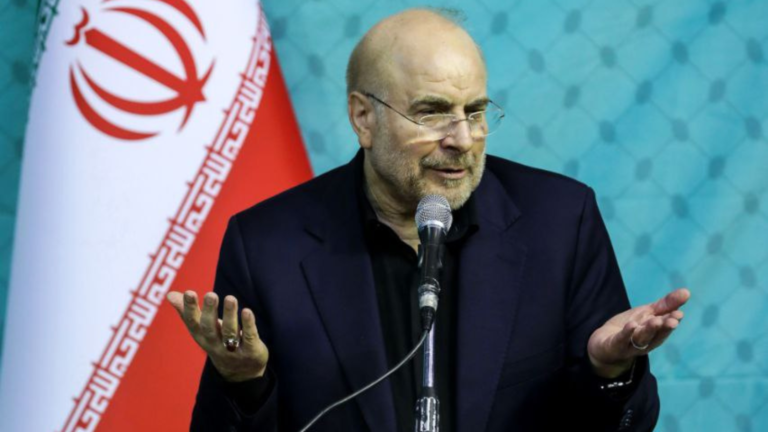
Tehran, Iran – The Fars News Agency, the prominent media arm of Iran’s Islamic Revolutionary Guard Corps (IRGC), reported on Sunday, May 17, 2026, that Parliament Speaker Mohammad Bagher Ghalibaf has been appointed as Iran’s special envoy for Chinese affairs. This is a strategic move reflecting Tehran’s desire to deepen its partnership with Beijing. Furthermore, Tehran seeks to strengthen its Eastern alliances with China amidst current international tensions.
The acceleration of a new world order and the resilience of the Global South
This high-level appointment aligns with the political vision recently put forward by Qalibaf, the Iranian parliament speaker, who stated that the world is on the cusp of a new world order. He also asserted that this new order will end unilateral hegemony.
Qalibaf confirmed in a post published Saturday evening on his official X account, quoting Chinese political literature: “As Chinese President Xi Jinping said, the transformations that the world has not witnessed for a whole century are accelerating today at the level of global geopolitics.”
The Iranian parliament speaker added: “The resilience of the Iranian people during the past 70 days has directly contributed to accelerating this historic transformation, and the future will certainly be in favor of the countries of the Global South.”
Academic and military man: A career spanning sensitive positions
Mohammad Bagher Ghalibaf is considered one of the most prominent political and military figures at the forefront of the Iranian regime, particularly amidst regional crises and the current fragile state of war and truce. He is also seen as an “architect” capable of managing sensitive foreign policy issues and complex diplomatic channels.
Qalibaf combines an academic background with rigorous military experience; he is an academic specializing in geopolitics, holding a doctorate in the field from the University of Tehran. He also began his career as a statesman at a very young age, rapidly rising through the ranks of the Islamic Revolutionary Guard Corps (IRGC). He eventually commanded the IRGC Air Force in his mid-thirties.
His long career, which skillfully combined field military service with civilian administration, included several high-ranking and sovereign positions in the state, including his role as a prominent military commander in the Revolutionary Guard. He later served as the head of Tehran’s police force and as mayor of the Iranian capital for several years. Finally, he attained his most prominent legislative position as Speaker of the Iranian Parliament.