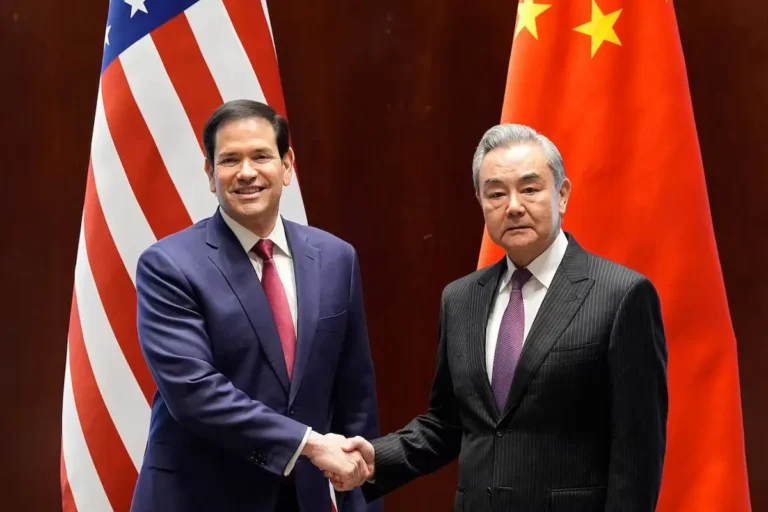
Beijing – Washington – In a phone call described by observers as a high-level diplomatic “pulse check,” Chinese Foreign Minister Wang Yi and his US counterpart Marco Rubio discussed the future of the complex relations between the two superpowers. Although the call focused on the necessity of expanding cooperation and managing differences to avoid collision, Beijing did not miss the opportunity to precisely redraw its boundaries. It emphasized that stable relations require a genuine readiness for high-level coordination that respects existing international balances.
“Taiwan First”: A Firm Chinese Message to Washington at the Core of Interests
During the call, the Chinese Minister was clear and decisive regarding the Taiwan issue, labeling it the “core of Chinese interests” and the greatest danger point that could ignite a crisis between the two countries at any moment. Obviously, Beijing wants to send a message to Marco Rubio—known for his firm stances—that Taiwan is a “red line” that is not up for negotiation, urging the US administration to adhere to its commitments and take what he described as the “right choice” to ensure matters do not spiral out of control.
Balancing Hegemony: Can Beijing and Washington Avoid the “Collision Trap”?
This call comes at a highly sensitive time, as relations oscillate between cooperation on economic files and tension over regional security and international competition. Accordingly, analysts believe that talk of “managing differences” is an attempt to temporarily calm the atmosphere while the strategic conflict remains beneath the surface. As a result, the international community awaits the outcomes of this high-level coordination: will the two sides succeed in reaching a “coexistence formula” in May 2026, or will Taiwan remain the “spark” that threatens global security?