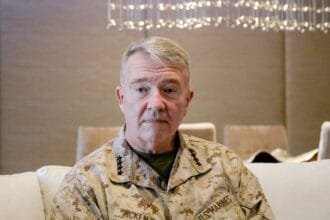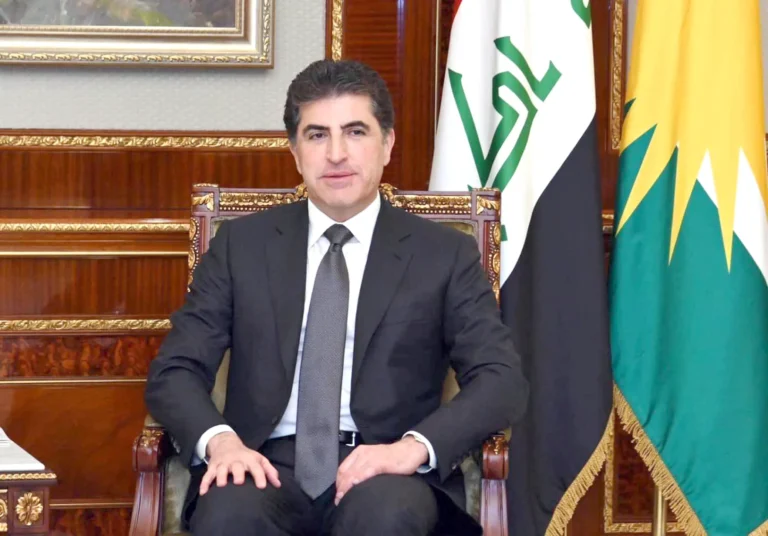
Kurdistan, Iraq – As part of diplomatic and military efforts to shield Iraq from the repercussions of regional conflicts, the President of the Kurdistan Region of Iraq, Nechirvan Barzani, received General Kevin Lambert, Commander of the International Coalition Forces in Iraq and Syria.
The meeting, held in Erbil, addressed the security roadmap for the next phase. This comes in light of the escalating tensions gripping the region. The two sides also discussed ways to strengthen internal stability to confront shared threats.
A “historic and sensitive” phase
An official statement issued by the Kurdistan Region Presidency indicated that both sides emphasized during the meeting the “utmost importance” of continued close coordination and cooperation between the Peshmerga forces, the Iraqi army, and security forces on one hand, and the international coalition forces on the other.
Both sides described the current phase as “very sensitive” in the region’s history. Moreover, they affirmed that this necessitates concerted efforts and a unified security vision to preserve the gains achieved. Furthermore, they stressed the importance of working to overcome the security and political challenges that the repercussions of regional wars may impose on Iraqi territory.
The danger of ISIS and the effects of the war
The statement explained that the talks addressed in depth the ongoing threat of terrorism,
with Barzani and Lambert emphasizing the need to continue joint operations to combat
the remnants of ISIS and ensure they do not return to threaten the security of civilians.
The meeting also discussed the effects of the ongoing war
and its direct repercussions on Iraq and the region.
Both sides stressed the importance of keeping Iraq out of international
and regional power struggles to guarantee its territorial integrity.
International commitment to supporting stability
For his part, Lieutenant General Kevin Lambert affirmed the commitment of the international coalition forces to continue providing support and advice to Iraqi forces and the Peshmerga. He praised the role of the Kurdistan Region as a pillar of stability in the region.
The meeting concluded with an emphasis on the fact that joint cooperation is not merely a military option, but a strategic necessity for protecting the security of citizens in the region and the rest of the Iraqi provinces. This ensures a secure future, free from the specter of extremism and armed conflict.