New Delhi, India – An Indian-flagged liquefied petroleum gas (LPG) tanker successfully transited the Strait of Hormuz via an unusual shipping route, after a delay of nearly three weeks due to escalating military tensions in the region.
The tanker had loaded its cargo at the port of Ruwais in the United Arab Emirates
before the military attacks began ,hoping to return within a week.
However, developments in the conflict disrupted shipping traffic and delayed its passage.
An alternative route to avoid risks
According to the ship’s crew, the tanker was given permission to proceed on March 23,
but only through a narrow passage north of Larak Island, near the Iranian coast, instead of using the usual shipping routes.
This directive came from the Iranian Revolutionary Guard, which cited risks in the regular shipping lanes,
including naval mines. This prompted the use of this less commonly used route.
Military escort and secure passage
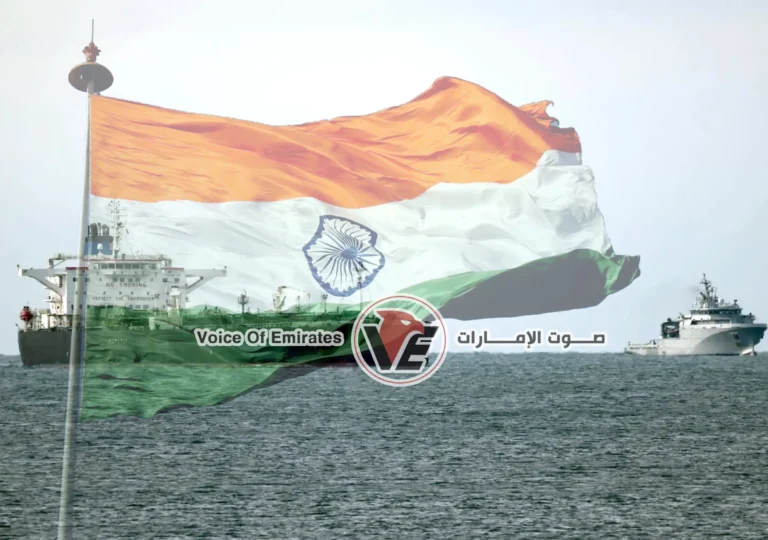
Shipping sources confirmed that the Indian Navy guided the tanker through its transit,
before escorting it for approximately 20 hours with four warships,
from the Gulf of Oman to the Arabian Sea, to ensure its safety.
The ship’s crew stated that they did not pay any transit fees.
Furthermore, no Iranian forces boarded the vessel during the voyage.
The journey was undertaken with the consent of all crew members.
Repercussions on energy supplies
This development comes amid India’s heavy reliance on liquefied petroleum gas (LPG) imports,
with the tanker carrying approximately 45,000 tons of the cargo.
This prompted authorities to reroute the vessel to unload its cargo at multiple ports to secure supplies.
Reports indicate that a number of Indian ships remain in the region.
Meanwhile, Iran is selectively allowing passage to vessels from specific countries.
This reflects the significant impact that regional tensions are having on global trade.