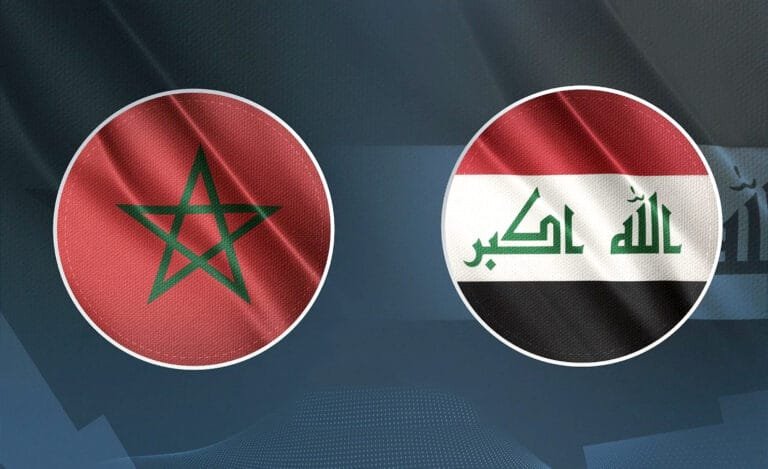
Rabat, Morocco – A senior Moroccan security official revealed on Thursday that the Kingdom intends to repatriate its citizens linked to ISIS who were transferred by the United States from Syria to detention centers in Iraq.
This comes as part of a government plan to address the issue of foreign fighters.
The official explained that Morocco is currently working on a comprehensive action plan to deal with this matter.
The plan also takes into account the diverse groups targeted by the measure.
These groups include former fighters, as well as women who lived in camps controlled by the Syrian Democratic Forces, and their children.
Transfer of detainees from Syria to Iraq
This move comes after the United States began transferring ISIS detainees held in northeastern Syria to prisons in Iraq last January.
This followed the collapse of the Syrian Democratic Forces (SDF),
which had been guarding several detention centers holding ISIS fighters and their families.
The US Central Command previously announced that it had ended its mission in Syria
after transferring approximately 5,700 adult ISIS detainees to Iraq.
Subsequently, this move prompted Baghdad to call on the countries concerned to repatriate their detained citizens.
Number of Moroccans in conflict zones
According to the security official, approximately 1,667 Moroccan fighters participated in the fighting in Syria and Iraq.
Of these, 244 are being held in prisons run by the Syrian Democratic Forces (SDF) in northeastern Syria.
Meanwhile, 279 former fighters have returned to Morocco in recent years.
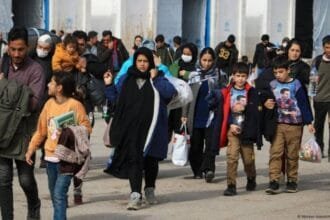
He noted that 269 Moroccan women remain in conflict zones, accompanied by 627 children.
An additional 134 women and 354 children are being held in camps run by the SDF.
He added that Morocco has already repatriated 125 women since the start of the Syrian crisis.
Legal and security measures
In March 2019, Morocco repatriated eight fighters who had been detained by the Syrian Democratic Forces.
They were tried in Moroccan courts and sentenced to prison terms ranging from 13 to 18 years on terrorism-related charges.
Moroccan law stipulates a prison sentence of up to 10 years for anyone who joins jihadist groups abroad.
This is part of the Kingdom’s efforts to strengthen legal measures to combat terrorism
and prevent the return of foreign fighters without legal accountability.
In the same vein, Moroccan authorities have confirmed that since the establishment of the Central Bureau of Judicial Investigations in 2015,
their security services have dismantled dozens of extremist cells.
They have also arrested more than a thousand individuals suspected of belonging to jihadist groups,
as part of the Kingdom’s efforts to enhance security and combat violent extremism.