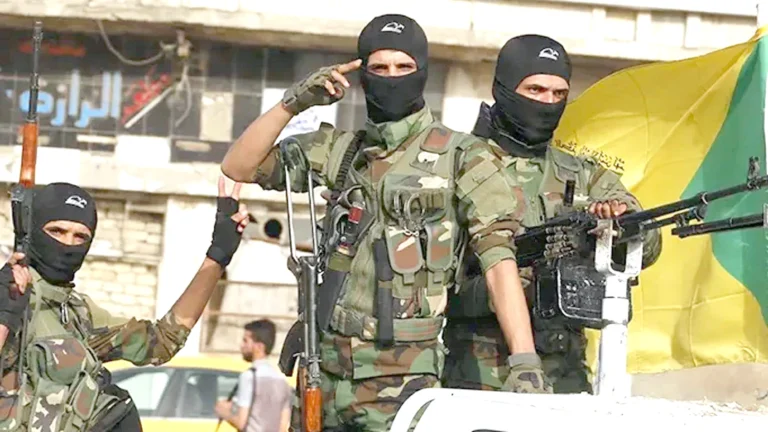
Baghdad, Iraq – Reports and informed sources indicate that many Iraqi armed factions loyal to Iran are not enthusiastic about engaging in the ongoing military confrontation between the United States and Israel on one side, and Iran on the other.
This is despite years of financial and military support provided by Tehran to these groups.
This stance comes at a time when the Iranian leadership is facing unprecedented
pressure following the recent military strikes targeting sites inside Iran.
Although some armed groups have claimed responsibility for limited drone or missile attacks against targets in Iraq and the region,
Iraqi security sources and Kurdish officials have confirmed that most of these attacks did not cause significant damage.
Furthermore, there is no clear evidence of some of these attacks, reflecting a clear reluctance among these factions to engage in direct escalation.
Allied network under pressure
Experts and officials estimate that the network of allies Iran has built in the region over the past decades has been subjected to a series of strikes and assassinations targeting prominent leaders in recent years.
This has weakened its ability to operate and coordinate. The killing of key figures such as former Quds Force commander Qassem Soleimani
and former Hezbollah Secretary-General Hassan Nasrallah has created a leadership vacuum within what is known as the “axis of resistance.”
Analysts believe these developments have made many Iraqi factions less willing
to risk an open confrontation with the United States or Israel.
This is especially true given the intense military and intelligence surveillance in the region.
Political and economic interests
One of the main factors explaining this hesitation is the transformation
that some leaders of armed factions in Iraq have undergone in recent years.
A number of them have entered the political and economic spheres and become part of official state institutions.
Observers say that many of these group leaders now possess extensive economic interests
and business networks, in addition to political positions within parliament or state institutions.
This makes them more cautious about engaging in a military confrontation
that could expose them to international sanctions or significant political and economic losses.
Officials also indicate that some of these factions have adopted a less confrontational rhetoric toward the United States compared to previous years.
This is occurring amidst attempts to maintain a political balance within Iraq.
The possibility of escalation under specific circumstances
Despite the current hesitation, Iraqi political and religious sources indicate that armed factions may take military action
if they perceive the conflict as a direct threat to Shiites in the region or to holy religious sites in Iraq.
The stance of these groups may also shift if the war drags on or if the regional confrontation expands,
particularly in the event of attacks that the factions consider direct targeting of them or their social and political base.
Currently, observers believe that Iraqi factions loyal to Iran prefer to monitor
the war’s developments and await clear directives from Tehran.
These factions are also attempting to avoid being drawn into a wider confrontation
that could have serious repercussions for Iraq and the entire region.