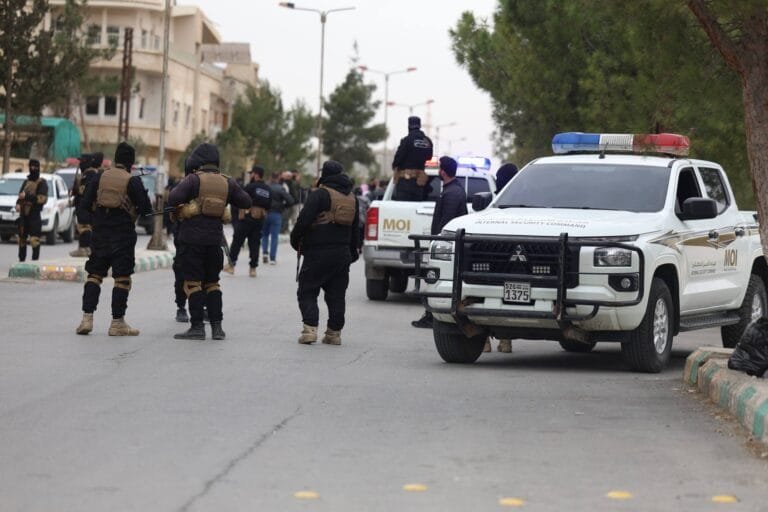
Damascus, Syria – In a sign reflecting the sensitivity of the security situation in post-Assad Syria, informed sources told Reuters on Friday that the Turkish intelligence service has formally requested its British counterpart (MI6) to play a greater role in protecting Syrian President Ahmed al-Sharaa. This comes in the wake of a series of serious assassination attempts targeting him recently.
Three-way coordination to thwart ISIS plans
Sources reported that this exceptional request stemmed from growing concern among allies about plots by ISIS to assassinate al-Sharaa. Al-Sharaa is seen as crucial to preventing the country from sliding back into sectarian conflict or a full-blown civil war. A senior Syrian security source confirmed to Reuters that the coordination followed the discovery of a “very serious assassination plot.” The source indicated that Turkish, British, and Syrian intelligence agencies are now regularly sharing security information to counter these threats.
A “buffer zone” between Ankara and Tel Aviv
Beyond the direct terrorist threat, a well-informed Western intelligence source revealed another geopolitical dimension to this request: Ankara, by involving London, seeks to create a “Western presence” in Damascus. This would serve as a “buffer zone” between Turkish and Israeli intelligence agencies, which are currently experiencing intense conflict and tension amidst the ongoing regional war against Iran.
A shift in the official Syrian position
In a significant development, the Syrian government in Damascus publicly acknowledged on Thursday the existence of direct security coordination with Turkish intelligence. The government indicated that the two sides had successfully thwarted an imminent ISIS attack targeting the capital. This first official acknowledgment of its kind represents a fundamental shift in the nature of the new security alliances shaping the Syrian landscape. While the precise role of MI6 on the ground remains unclear, the intensified intelligence activity reflects an international desire to bolster the legitimacy of the al-Sharaa government. This government is considered the only guarantee against a return to the security vacuum that ISIS previously exploited to seize control of vast swathes of the country.