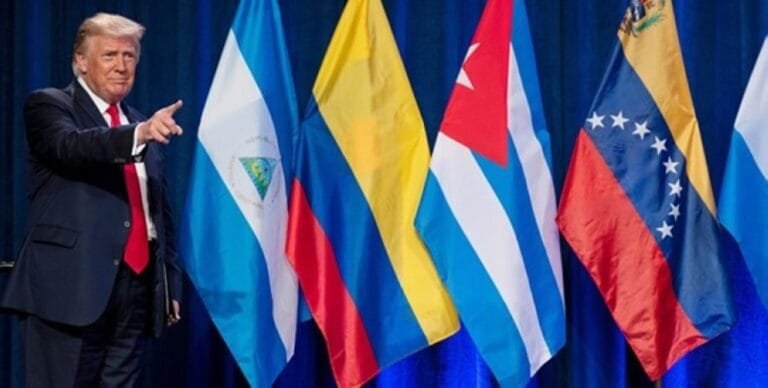
Florida, USA – Several Latin American leaders met with US President Donald Trump at a regional summit in Florida to discuss ways to combat transnational drug cartels. This comes amid escalating activity by criminal organizations and a surge in drug trafficking into the United States and the region.
Discussions at the summit focused on strengthening security and intelligence cooperation between Washington and Latin American countries. They also centered on establishing joint mechanisms to pursue drug trafficking networks operating across land and sea borders. These networks exploit the vulnerability of some border areas to transport massive quantities of narcotics.
During his address, Trump affirmed that his country “will not tolerate criminal cartels.” He emphasized the need to form a unified regional front to confront these networks, which he described as “a direct threat to national security and social stability in the continent.”
He indicated that his administration is working to support countries in the region with security equipment and advanced technology to track drug traffickers. He also mentioned expanding maritime and aerial surveillance operations in the routes used by criminal gangs.
For their part, Latin American leaders participating in the summit stressed the importance of strengthening regional coordination to confront this phenomenon, which has become a serious challenge to national economies and the stability of their societies. They emphasized that an effective response requires the exchange of intelligence and intensified joint operations among security agencies.
The summit comes at a time when countries across the Americas are witnessing a surge in the activities of drug cartels, which have expanded their networks and smuggling routes. These cartels have exploited the economic and political crises in some countries. As a result, Washington has intensified its diplomatic and security efforts to coordinate a broad regional response.
Observers believe that the Florida summit could mark the beginning of a new phase of security cooperation between the United States and Latin American countries. This is especially relevant given the increasing pressure to curb the flow of drugs and illegal immigration linked to the activities of these cartels.