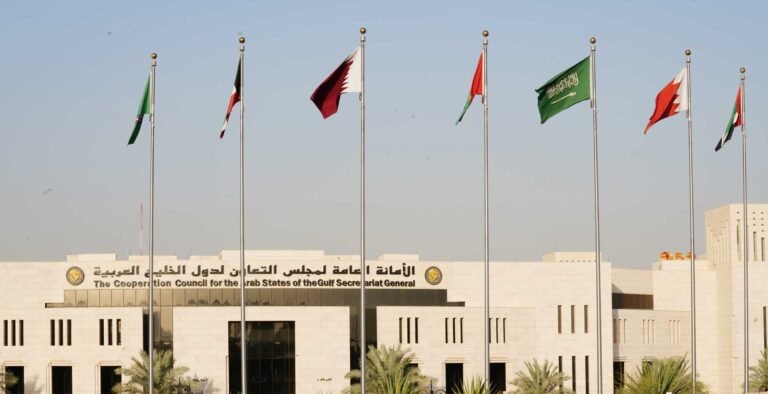
Dubai, United Arab Emirates – The Ministerial Council of the Cooperation Council for the Arab States of the Gulf (GCC) held its 50th extraordinary meeting via video conference on Sunday, 12 Ramadan 1447 AH, corresponding to March 1, 2026. The meeting was chaired by His Excellency Dr. Abdul Latif bin Rashid Al Zayani, Minister of Foreign Affairs of the Kingdom of Bahrain, who is the current chair of the Ministerial Council.
The meeting was attended by His Excellency Khalifa Shaheen Al Marar, Minister of State at the Ministry of Foreign Affairs of the United Arab Emirates; His Highness Prince Faisal bin Farhan Al Saud, Minister of Foreign Affairs of the Kingdom of Saudi Arabia; His Excellency Badr bin Hamad bin Hamoud Al Busaidi, Minister of Foreign Affairs of the Sultanate of Oman; His Excellency Sheikh Mohammed bin Abdulrahman bin Jassim Al Thani, Prime Minister and Minister of Foreign Affairs of the State of Qatar; and His Excellency Sheikh Jarrah Jaber Al-Ahmad Al-Sabah, Minister of Foreign Affairs of the State of Kuwait. His Excellency Jassim Mohammed Abdullah Al-Budaiwi, Secretary-General of the Gulf Cooperation Council, also participated.
Iranian attacks
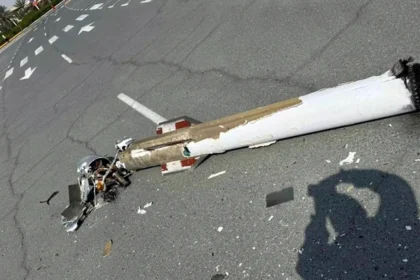
According to the Council’s statement, the meeting was dedicated to discussing the Iranian missile and drone attacks targeting the United Arab Emirates, the Kingdom of Bahrain, the Kingdom of Saudi Arabia, the Sultanate of Oman, the State of Qatar, and the State of Kuwait. These attacks began on Saturday, February 28, 2026. The Council also reviewed the damage it said was inflicted on civilian facilities, service sites, and residential areas. It noted the resulting material damage and the threat to the security, safety, and lives of citizens and residents.
Condemned in the strongest terms
The Ministerial Council expressed its rejection and condemnation “in the strongest terms” of these attacks, considering them a grave violation of state sovereignty and the principles of good neighborliness, and a breach of international law and the Charter of the United Nations. It also affirmed that targeting civilians and civilian objects constitutes a violation of the rules of international humanitarian law. Furthermore, it emphasized the complete solidarity among the GCC states, clarifying that their security is “indivisible.” The Council also affirmed the GCC states’ legal right to respond in accordance with Article 51 of the Charter of the United Nations.
A call for an immediate halt to the escalation, a warning about the threat to navigation and energy, and a responsibility for the Security Council.
The Council commended the efficiency and readiness of the armed forces and air defense systems of the member states, which countered the missile and drone attacks. It added that these forces contributed to neutralizing the threat, mitigating its effects, and protecting lives, facilities, and vital assets. The Council affirmed that, in light of the “unjustified Iranian aggression,” the GCC states will take all necessary measures to protect their territories, citizens, and residents. It emphasized that this includes the option of responding to the aggression.
Immediate cessation of attacks
The Council stressed the need for an immediate cessation of attacks to restore security, peace, and stability, emphasizing the importance of maintaining air and maritime security, safeguarding waterways, ensuring the safety of supply chains, and stabilizing global energy markets. It noted that the stability of the Arabian Gulf is a cornerstone of global economic stability and maritime navigation. The Council also called on the international community to condemn the attacks and urged the Security Council to take immediate and decisive action to prevent their recurrence. Furthermore, the Council reiterated that the GCC states have consistently advocated for dialogue, negotiations, and resolving issues with the Islamic Republic of Iran. It commended the role of the Sultanate of Oman and affirmed that dialogue and diplomacy are the only way to overcome the crisis. The Council warned that any escalation would undermine regional security and push the region down a dangerous path.
At the conclusion of the meeting, the Council offered its sincere condolences to the families of the victims and wished the injured a speedy recovery.