Bangkok, Thailand – The border between Thailand and Cambodia witnessed a sudden military escalation on Tuesday following an exchange of fire between the two countries’ forces, the first such incident since the latest ceasefire agreement. This puts the fragile truce in place since last December on the brink of collapse and threatens to revive the specter of bloody border conflicts in Southeast Asia.
The spark of the crisis: a 40mm shell
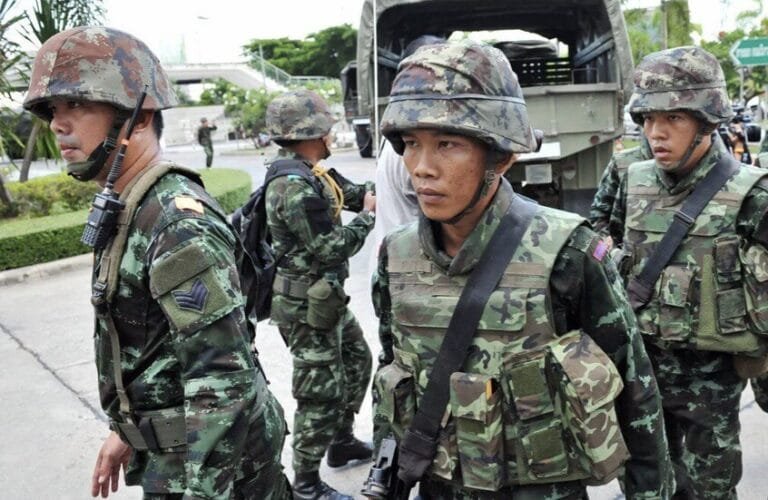
The crisis began in the early hours of Tuesday morning when the Thai army announced in an official statement that one of its patrols in the northeastern province of Sisket was directly targeted by a 40mm mortar shell fired from the Cambodian side. The statement explained that the Thai patrol, which was carrying out its routine duties in one of the most sensitive border areas, immediately returned fire in accordance with the rules of engagement. Although no casualties have been reported so far, the Thai army confirmed it has reinforced its troop deployment and raised its readiness level along the border in anticipation of any further developments.
Accusations of ceasefire violations and the memory of “Breh Vihear”
Bangkok explicitly accused Phnom Penh of violating the December understandings, which aimed to freeze military activity and pursue diplomatic channels. This escalation is reminiscent of the bitter armed conflict over the historic Preah Vihear temple (2008-2011). It demonstrated that the overlapping geographical and sovereign jurisdictions in this region represent a “ticking time bomb” that could explode at any point of conflict.
Siskit: A Geopolitical Hotspot
The incident’s danger lies in its occurrence in the Sisket region, where rugged mountainous and forested terrain makes determining the demarcation line a complex matter. The border between the two countries stretches for 800 kilometers. Moreover, many points along it still lack a final, mutually recognized demarcation, transforming any routine troop movement into a perceived threat to sovereignty by the other side.
Regional concerns and the role of ASEAN
Regionally, a sense of anticipation and caution prevails within the Association of Southeast Asian Nations (ASEAN). Analysts believe that the association’s inability to establish neutral border monitoring mechanisms among its members renders ceasefire agreements merely temporary fixes that fail to address the underlying structural conflicts related to border demarcation and economic interests. While regional powers await Cambodia’s official statement clarifying its version of events, the situation on the ground remains fluid, with all possibilities open. There are fears that this limited clash could escalate into a wider diplomatic crisis, jeopardizing the stability efforts built up over the past few months.