Washington, DC – The US military announced the killing of 11 people accused by Washington of involvement in drug trafficking. This followed three strikes targeting their boats, two in the eastern Pacific Ocean and one in the Caribbean Sea. These operations are part of a military campaign that began last September.
Details of the strikes
A statement issued by the U.S. military command for Latin America and the Caribbean, as reported by the French newspaper Le Figaro, indicated that eight people were killed aboard two boats in the eastern Pacific Ocean. Three others were killed on a third boat in the Caribbean Sea. The statement confirmed that no U.S. military personnel were injured.
According to the statement, the death toll since the start of these operations last September has exceeded 140. These incidents are part of a campaign that Washington says targets transnational drug trafficking networks.
Legal controversy and international criticism
The US military frequently posts videos of the strikes on social media, showing small boats being destroyed by explosions filmed from the air. However, according to media reports, the Trump administration has not provided detailed public evidence conclusively proving the targeted boats’ involvement in smuggling activities.
The campaign has sparked widespread controversy within US political circles and internationally. Experts and UN officials have suggested that some of the operations may amount to extrajudicial killings, given the absence of trials or traditional legal proceedings.
Combating cartels and military presence
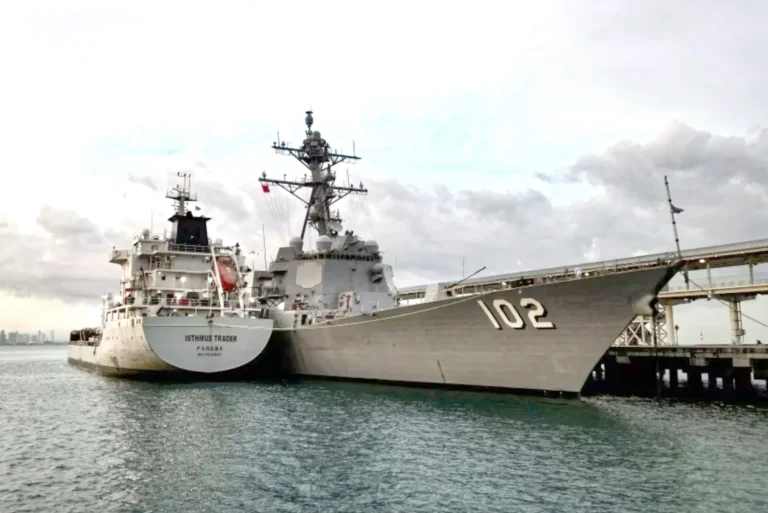
Washington maintains that the operations are part of a campaign against the cartels that fuel the drug market within the United States. Elements of the naval fleet deployed since last fall remain stationed in the region. Meanwhile, the aircraft carrier USS Ford was transferred to the Middle East in recent weeks.
These developments reflect a significant escalation in the US strategy to pursue drug trafficking networks in international waters. Debate continues regarding the legal and humanitarian dimensions of these operations.