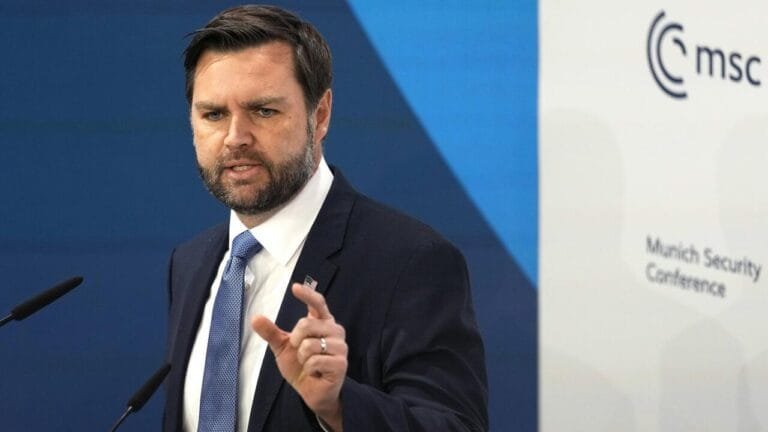
Washington, DC – In a candid interview with journalist Megyn Kelly on Sirius XM, Vice President J.D. Vance highlighted the unique challenges facing US foreign policy toward Iran. He also described the structure of governance there as a major obstacle to traditional diplomatic efforts.
Criticism of the Iranian power structure
Vance explained that the fundamental dilemma lies in the identity of the actual “decision-maker” in Tehran. He pointed out that the separation between official and actual power creates a delicate diplomatic situation. Vance said,
“The main decision-maker in Iran is the Supreme Leader of the Islamic Republic. The president’s role is practically limited. It appears that the foreign minister is the one who speaks with the Supreme Leader, and he is practically the person through whom we communicate.”
The “strange diplomacy” challenge
Vance expressed his frustration at the lack of direct communication channels with the highest levels of power, asserting that this disconnect makes international understandings virtually impossible. He added, “When you can’t even communicate with the person who actually runs the country, diplomacy with such a state becomes extremely strange and very difficult.”
Compared to the superpowers
Vance compared the situation with Iran to relations with countries like Russia and China. He pointed out that President Donald Trump has the ability to make direct phone calls to leaders like Vladimir Putin and Xi Jinping. Vance argued that “the fact that we can’t speak directly to the real leadership of Iran is truly extraordinary and makes diplomacy extremely difficult.”
Quick analysis: Vance’s remarks suggest that the Trump administration may adopt an approach that pushes for a change in the diplomatic “rules of the game” with Tehran. This comes amid the emphasis on the fact that current channels do not reach those who hold the ultimate decision-making power.