Tel Aviv, Israel – Israel’s Channel 14 revealed details of a high-level meeting between US Central Command (CENTCOM) Commander General Brad Cooper and Israeli security officials. The meeting focused on potential scenarios for dealing with the Iranian issue in the coming phase. According to the report, Washington is currently pursuing a strategy of waiting and preparing for a full-scale conflict. However, it maintains full readiness to execute a “rapid operation” the moment a political decision is made. This ensures the element of surprise and the ability to impose new realities on the ground.
According to the channel, US military decision-makers, should they resort to military action, tend to adopt an operational model based on “short, swift, and clean” strikes. This model aims to achieve significant strategic results within a limited timeframe.
This vision stems from a growing conviction within US circles that regime change in Tehran is no longer merely an option, but a strategic imperative to address the root causes of the Iranian threat.
It is also estimated that any potential attack would primarily target what Washington describes as “instruments of repression.” These include institutions and individuals involved in suppressing Iranian protesters and citizens, based on the premise that this segment of the regime has completely lost its legitimacy.
In this context, the commander of US Central Command emphasized the United States’ unwavering commitment to protecting its allies in the region, foremost among them Israel, and preventing any harm to their security or stability.
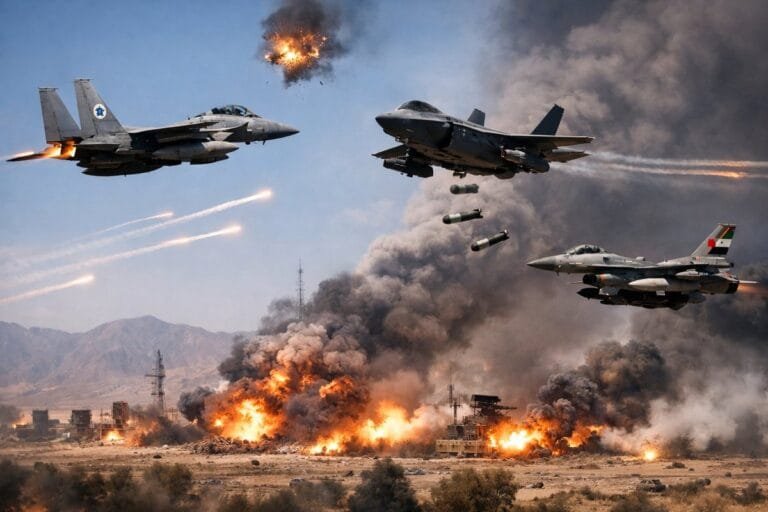
In the same vein, the report reviewed the unprecedented scale of the US military buildup in the Middle East, describing it as granting the US military near-absolute freedom of action and a high degree of maneuverability and rapid escalation capability. It noted the arrival of the aircraft carrier USS Abraham Lincoln in the region, accompanied by several destroyers equipped with hundreds of Tomahawk missiles, in addition to nuclear submarines and command and support vessels deployed in the Arabian Gulf. The report also highlighted the widespread deployment of squadrons of advanced fighter jets, including F-35A, F-15E, F-16, and A-10 aircraft. These aircraft are supported by aerial refueling tankers, enabling long-range operations. Furthermore, maritime patrol aircraft and drones are present, enhancing air superiority and the ability to gather intelligence and conduct precision strikes.
The report argues that this military deployment grants Washington significant operational flexibility. It allows for a rapid transition from a “limited and targeted strike” to launching a “long-term military campaign” within a short timeframe, depending on developments on the ground and the nature of the political decision.
The report also indicates that US planning includes a broad target bank in the event of any military operation. This bank includes the top leadership of the Iranian regime and their potential successors, senior commanders of the Revolutionary Guard and the Basij forces, as well as key military installations and critical infrastructure, and ballistic missile launch sites and systems.
The report concludes that the United States, while currently favoring a policy of preparedness and deterrence, is keeping the option of a “clean and swift” military strike firmly on the table. This is based on a military buildup described as the largest in years, capable of radically altering the dynamics of the conflict in the region in record time should the decision to confront the US be made.