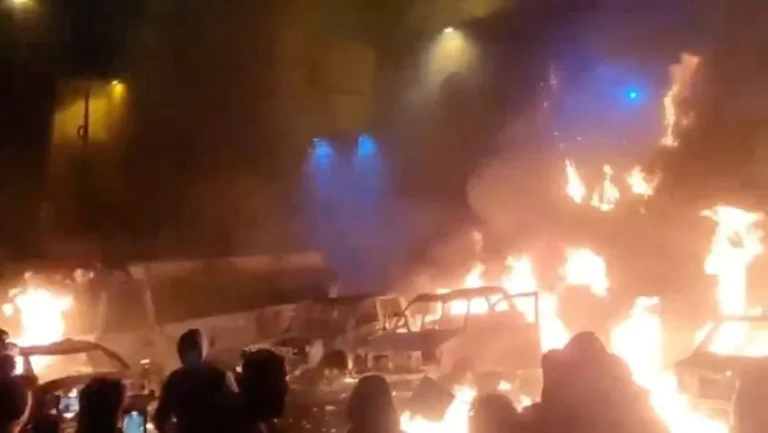
Tehran, Iran – As anti-government protests in Iran have intensified since late December 2015, the capital, Tehran, witnessed a wave of violence on Thursday night that left more than 200 people dead, according to a doctor at six hospitals in the city who spoke to Time magazine on condition of anonymity.
The doctor explained that the majority of the victims were killed by live ammunition. Authorities removed some bodies from the hospitals on Friday. He confirmed that most of the dead were young people who were killed in front of police stations and other locations where live fire was directed at them. Security forces were responsible for the deaths, and dozens more were wounded.
These developments followed a near-total internet and telephone blackout. US President Donald Trump warned the regime that it would pay a heavy price if it killed protesters. The protests, which have grown in number since December 28, began as demonstrations against the deteriorating economic situation. They quickly escalated into calls for the overthrow of the Islamic regime, which has ruled since 1979. Chants of “Freedom” and “Death to the Dictator” were heard, although some government buildings were vandalized.
Although human rights organizations have recorded significantly lower figures—63 confirmed deaths since the protests began—this discrepancy is attributed to differing reporting standards and restrictions on access to victims. Time magazine was unable to independently verify the figures. These events coincided with increasingly strident messages from the regime, with Supreme Leader Ayatollah Ali Khamenei asserting that the Islamic Republic would not back down in the face of “saboteurs” seeking to appease the United States. Meanwhile, Tehran’s prosecutor general announced that protesters could face the death penalty. State television warned parents against sending their children to the protests.
Amid this crisis, divisions within the security apparatus became apparent. According to a riot police officer from northwestern Iran, who described the confusion among security forces, they were debating whether a large-scale crackdown would restore order. This, he said, could further enrage the population. He noted that decisions were being made in closed-door meetings without the knowledge of rank-and-file officers, amidst a climate of fear and uncertainty surrounding potential orders to fire on protesters.
Political experts explained that the regime is facing unprecedented challenges. As protests expand to include the working class and popular markets, the regime is finding it increasingly difficult to use traditional force for repression. Meanwhile, economic and environmental crises, along with power outages and water shortages, are exacerbating public frustration. Hossein Hafezian, an expert on Iranian affairs, stated, “They cannot even provide the most basic economic support for their population. They are now in a survival mode.” The participation of some ethnic minorities, particularly the Kurds, has become prominent, as they have taken to the streets to protest their marginalization. Some protesters have placed their hopes in President Trump, calling for intervention similar to that in Venezuela. At the same time, some members of the police and Basij militia have expressed internal reluctance to participate in the crackdown. There is a palpable fear of being ordered to fire on civilians.
The situation in Iran remains tense, with protests escalating, the death toll rising, and divisions deepening within the security apparatus. The country faces unprecedented economic, social, and political challenges, leaving its future at a crossroads between repression and continued popular uprising.