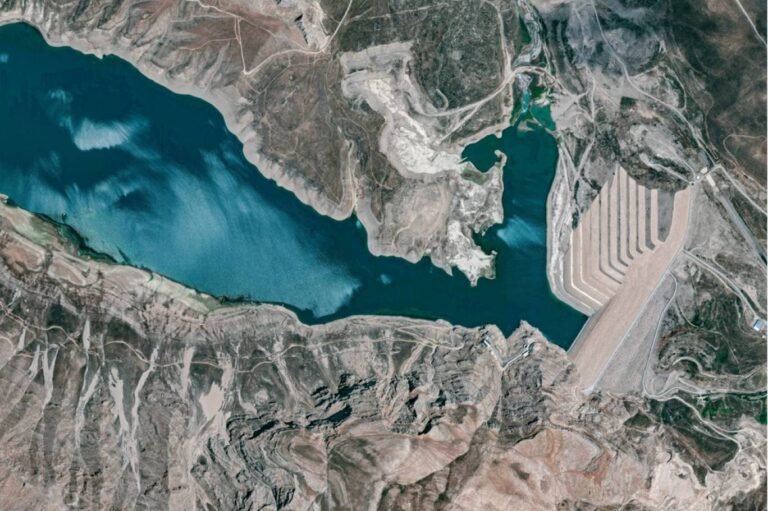
Tehran, Iran – Iranian authorities were forced to halt electricity production at the Karkheh Dam on Saturday, AFP reported. The Karkheh Dam is one of the largest earth-fill dams in the Middle East. This came after an unprecedented drop in water levels to levels that prevented the turbines from operating.
Amir Mahmoudi, the director of the dam and its power station, said that the sharp drop in the water level of the Karkheh Dam reservoir forced them to “completely shut down the generating units.” He explained that operation had become impossible after the water level dropped to about 180 meters. This is 40 meters below the minimum level required to operate the station.
Mahmoudi noted that the reservoir currently contains only about one billion cubic meters of water. This figure reflects the profound impact of the drought that has plagued Iran this year. This has prompted authorities to open the lower valves to secure the population’s basic water needs.
The Karkheh Dam, located on the Karkheh River 22 kilometers northwest of Andimeshk in Khuzestan Province, is one of the largest water projects in Iran and the region. The dam is a crucial component of the irrigation and power generation system.
Iran is facing its worst drought in six decades. According to official data, rainfall levels have dropped by about 90% compared to the long-term average. This decline has led to water levels in reservoirs across several provinces reaching record lows. As a result, authorities have held prayers for rain in several cities and implemented cloud seeding operations to stimulate rainfall. They have also implemented periodic water rationing schedules to conserve water.
It is estimated that heat waves and prolonged droughts will worsen in the coming years. This is due to climate change. Therefore, Iran faces complex challenges in managing its water resources and ensuring its energy security.