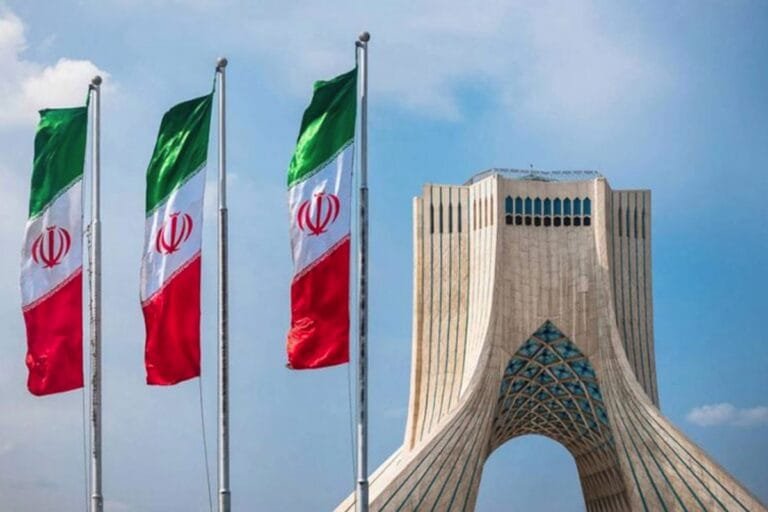
Voice of the Emirates, Iran – Amidst growing discussions about the need to move the Iranian capital from Tehran, historians have revealed the geographical and political dimensions. The new proposals center on shifting the country’s administrative center of gravity to the southern coast.
Iranian President Masoud Pezeshkian recently discussed plans to move the Iranian capital to the south of the country, closer to the Persian Gulf. He explained that this relocation is necessary because the current situation is hindering the country’s development. In this report, prepared by a Kazinform news agency correspondent, we will explore the reasons behind this decision. We will also assess its effectiveness.
Obstacles to the project to relocate the Iranian capital
For his part, Abdul-Redha Ben Ali, the former cultural attaché at the Iranian embassy in Cairo, stated that the issue of moving the Iranian capital from Tehran, while considered an “inevitable necessity” to address overcrowding and water scarcity, faces a significant challenge—not only legal, but also substantial financial and logistical.
Ben Ali explained to “Sawt Al Emarat” that this issue is not new and has been raised by most previous Iranian presidents. However, its implementation remains difficult due to the following practical complexities and major challenges:
Key challenges hindering implementation
Ben Ali believes that relocating the Iranian capital requires laying the proper groundwork for such a move. It also demands enormous sums of money, which unfortunately are not currently available.
The Iranian official added that relocating the capital requires more extensive study and a dedicated budget. It also necessitates comprehensive assistance and cooperation from all government institutions, including the Majlis (parliament).
Ben Ali clarified that there are no constitutional impediments to moving the capital, noting that the Iranian constitution does not address such matters. Therefore, there is no constitutional obstacle preventing the relocation.
Timetable
Regarding the long timeline, the Iranian official estimated that the process of moving the capital, if a final decision is reached, will take at least five to ten years.
To demonstrate the difficulty and length of the process, Ben Ali cited the example of relocating Egypt’s new administrative capital, noting that the project required significant expenditure and took approximately ten years.
Suggested locations for the new Iranian capital
Arash Azizi, an Iranian historian at Clemson University in South Carolina, noted that Iranian President Masoud Pezeshkian recently raised this issue. He cited water scarcity, land subsidence, and air pollution as factors necessitating this move.
Pezeshkian proposed moving the capital south, closer to Iran’s long coastline. He raised this proposal in meetings with representatives from coastal provinces such as Hormozgan and Sistan and Baluchestan.
Historian Azizi told “Sawt Al Emarat” that this support aligns perfectly with Pezeshkian’s efforts to address discrimination against ethnic and religious minorities in the country, particularly given that the provinces of Hormozgan and Sistan and Baluchestan have a Sunni majority.
A historical precedent and a logistical challenge
Azizi emphasizes that the move to relocate the capital is not unique. Dozens of countries have preceded Iran in this, and Iran itself has had dozens of capitals throughout its long history; Tehran only assumed this role in the late 18th century.
Azizi emphasizes that the move to relocate the capital is not unique. Dozens of countries have preceded Iran in this, and Iran itself has had dozens of capitals throughout its long history; Tehran only assumed this role in the late 18th century.
The logistical nightmare: Chabahar is located 1,800 kilometers from Tehran, making organizing such a move a logistical nightmare.
Obstacles necessitate postponement
Azizi agrees with what former cultural advisor Abdul-Redha bin Ali pointed out, emphasizing that the biggest challenge remains the enormous financial and logistical one. The vast sums needed to lay the groundwork are not currently available, and the process could take at least five to ten years.
These facts confirm that the move from Tehran, which is suffering from a series of crises, to a new capital requires comprehensive government action. Massive funding is also necessary, which represents the main obstacle to turning this “inevitable necessity” into reality.