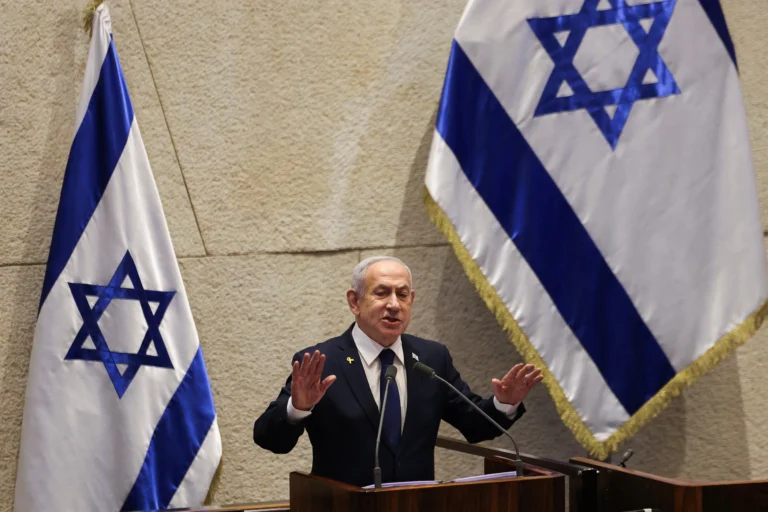
Tel Aviv, Israel – Israeli Prime Minister Benjamin Netanyahu on Tuesday called on countries in the region to join Israel in a “comprehensive effort” to expel Hamas from the Middle East.
This comes less than 24 hours after the UN Security Council approved
US President Donald Trump’s plan to end the ongoing war in the Gaza Strip.
The Security Council adopted the American plan last night,
which includes controversial provisions.
The most prominent of these is the offer of amnesty to Hamas members
who commit to ending violence and join the political process.
the reconstruction of Gaza
The plan is the first large-scale international initiative to receive US and Israeli support.
It is based on a comprehensive ceasefire, the reconstruction of Gaza,
and new security arrangements under international supervision.
Netanyahu had previously expressed support for the plan
during his visit to the White House last September.
However, his recent statements reveal – according to Reuters –
a difference in priorities between Tel Aviv and Washington.
This concerns the future of Gaza and the fate of Hamas after the war.
The Israeli prime minister insists that any permanent settlement must
include the “complete uprooting” of the movement from the region.
strategic mistake
He stressed that allowing it to be integrated into post-war
arrangements was a “strategic mistake.”
For its part, Hamas rejected large parts of the plan,
describing it as “completely biased towards Israel.”
She stressed that she would not accept any initiative that did not
stipulate the complete withdrawal of Israeli forces from the Gaza Strip.
The blockade that had been in place for years was lifted.
Analysts predicted that the next phase would witness political disagreements
between Israel and the United States regarding the mechanisms for implementing the plan.
Especially with regard to the future of governance in Gaza
and the role of Palestinian factions in the upcoming security arrangements.
They also pointed out that the Security Council’s resolution puts
international pressure on all parties to commit to the diplomatic path.
This is despite the ongoing battles on the ground.