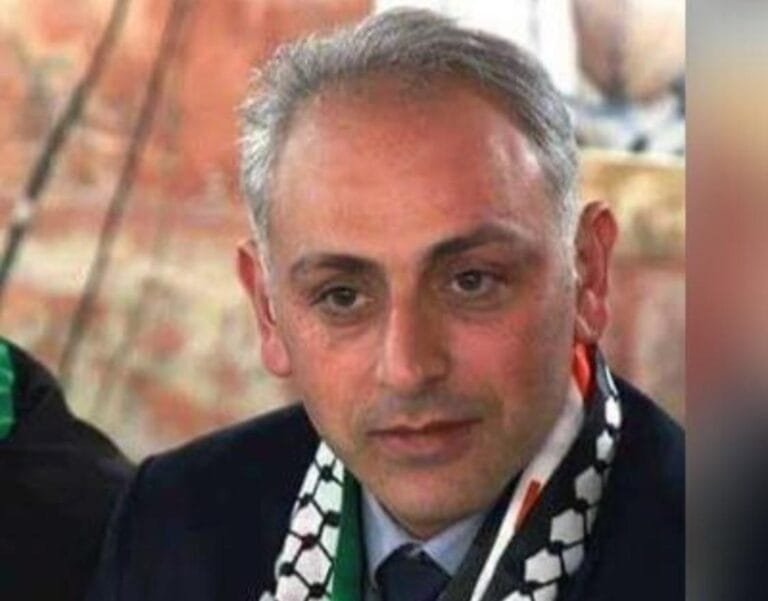
Gaza, Palestine – Palestinian writer and political analyst Zaid al-Ayoubi offered an assessment of Hamas’s current position regarding the ceasefire negotiations. He asserted that the movement is adopting a strategy of stalling and buying time amidst mounting international pressure. He also noted a clear shift in its political and media rhetoric.
Hamas: Between Evasion and Survival
Al-Ayoubi tells “Sawt Al-Emarat” that Hamas is not necessarily seeking to continue ruling Gaza. Rather, it aims to preserve its existence and ensure its survival in the face of international threats and attempts to disarm it. He adds that the movement has begun to shift its media rhetoric from inciting against the occupation to focusing on a ceasefire and the implementation of international agreements.
A new political vision and leadership statements
Al-Ayoubi considers Hamas leader Mousa Abu Marzouk’s statement regarding the movement’s disarmament to reflect a new political vision. It confirms Hamas’s willingness to play a role in protecting settlements in exchange for their continued existence and protection from destruction.
The Palestinian analyst describes this move as a strategic shift in Hamas’s rhetoric, aligning it with the international political reality.
Potential concessions regarding weapons
Al-Ayoubi indicates that Hamas’s stance on weapons has fundamentally changed, with the leadership now willing to negotiate the surrender of arms to an international or Arab force, or within the framework of a national consensus.
He adds that this shift reflects the movement’s leaders’ realization that they are in a political predicament. This compels them to make concessions, even at the expense of the Palestinians’ political and economic situation.
International decision and the importance of the international community
Al-Ayoubi asserts that the anticipated US resolution on Palestine is one of the most important in the history of the Palestinian cause. It aims to implement a ceasefire, disarm Hamas, support peace efforts, and establish a Palestinian state with Jerusalem as its capital.
He adds that this resolution partially benefits the Palestinians, as it limits Israeli aggression and puts an end to Hamas’s internal political maneuvering.
International forces in Gaza
Al-Ayoubi anticipates the deployment of international enforcement forces within the Gaza Strip. He clarifies that the Palestinian people will not accept any force acting as an occupying power, and that the demand is for an international protection and peacekeeping force to ensure the implementation of agreements without violating local sovereignty.
Al-Ayoubi concludes that Hamas has begun adapting to international plans to ensure its own survival, not necessarily to protect the Palestinian people. He asserts that it is prepared to make all necessary concessions regarding weapons and a ceasefire, even at the expense of the political and economic situation in the Gaza Strip.