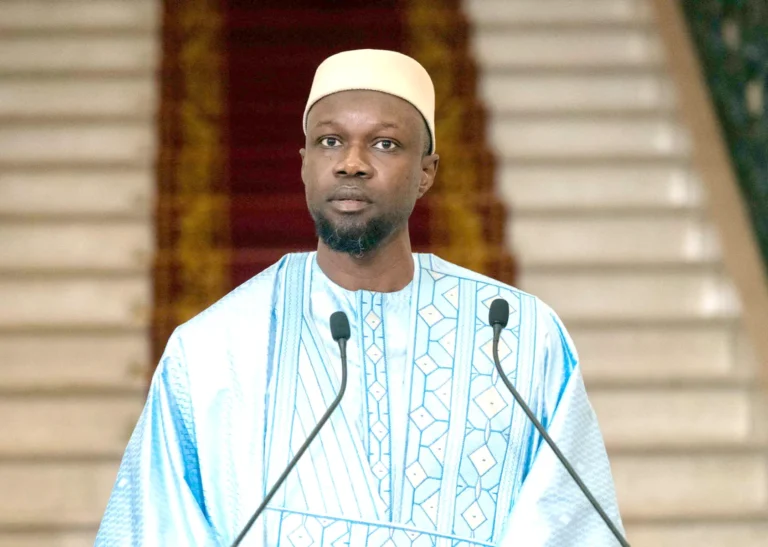
Dakar, Senegal – In a controversial move, Senegalese opposition leader Ousmane Sonko announced his rejection
of the International Monetary Fund’s conditions for restructuring the country’s debt.
He thus preferred to enhance his image as a defender of national
sovereignty rather than to reassure investors and financial markets.
According to a report by LSI Africa.
The stance of the opposition leader in Senegal led to a historic decline
in Senegalese Eurobonds, sparking widespread concern among investors.
This is about the country’s ability to meet its financial obligations
and achieve sustainable economic stability.
Analysts believe these developments could affect the confidence
of international financial institutions in the Senegalese economy in the short term.
Major economic challenges
The report indicated that the rejection of the conditions included the financial
and economic reforms that the International Monetary Fund
had stipulated in exchange for providing financial support.
This includes controlling public spending and increasing transparency in debt management.
It is believed that Sonko, the opposition leader in Senegal,
is seeking through this move to establish himself as a national leader
who puts the interests of the people above external pressures.
This is despite the potential economic risks.
This stance comes at a time when Senegal is facing significant economic challenges,
including high levels of external debt.
Slowing growth and rising commodity prices.
Experts warn
Experts warned that any delay or refusal of the required reforms
could exacerbate the budget deficit and increase the costs of external financing.
This could affect development and infrastructure projects in the country.
This event reflects the ongoing struggle between international
pressures to maintain the stability of financial markets.
The desire to preserve the economic and political independence of states,
This is a debate currently being led by Senegal in the context of global debt crises.