Sidon, Lebanon – On Saturday, the Lebanese army began the fourth operation to receive weapons in the Palestinian camps.
Media reported that the handover process began from Al-Badawi camp in the north.
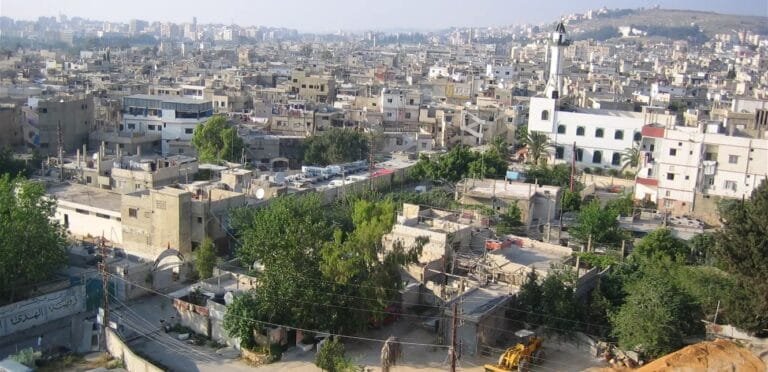
This coincides with Ain al-Hilweh camp, which is considered “the most dangerous” by many security observers and analysts. It is also the largest.
She also explained that the operation is expected to last 3 days.
She pointed out that the Palestine Liberation Organization and its affiliated factions delivered a number of weapons trucks. These contained ammunition, mines, and missiles.
In addition, she explained that 5 trucks entered the Palestinian camp in Ain al-Hilweh.
Negotiations with Hamas and Islamic Jihad
Negotiations are still ongoing with Hamas and Islamic Jihad to hand over weapons. This is after they previously announced their refusal to do so.
The process of handing over Palestinian weapons began last month (August) from Burj al-Barajneh camp in the southern suburb of Beirut.
This took place as a first step to implement the decision of the Lebanese–Palestinian summit held on May 21. It was between Lebanese President Joseph Aoun and Palestinian President Mahmoud Abbas. This affirmed Lebanon’s sovereignty over all its territories, extended state authority, and applied the principle of arms exclusivity.
This operation was later completed. Weapons were collected from the area south of the Litani River, from the camps of Errachidia, Al-Bas, and Burj Al-Shamali – Tyre.
The big knot
Ain al-Hilweh camp constitutes the most prominent node in the issue of arms control.
The reason for your lie is that the amount of weapons in the hands of the various factions is large. In addition, there is the presence of extremist groups as well.
This camp also witnessed many confrontations and clashes in intermittent stages.
It is worth noting that the Palestinian refugees are distributed over 12 camps. These are Ain al-Hilweh, which is the largest, al-Miya and Miya, Rashidiya, and al-Bass. Others include the northern tower, Burj al-Barajneh, Sabra and Shatila, and Mar Elias in Beirut. Also, Nahr al-Bared in northern Lebanon, al-Badawi in northern Lebanon, al-Wafil in Baalbek, and Dbayeh in Mount Lebanon.