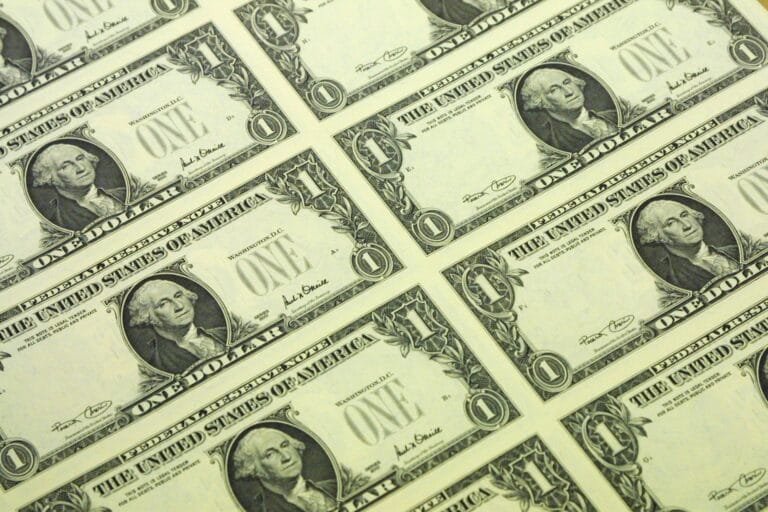
Washington, United States – The US Dollar is today the most traded currency in the world and the fundamental pillar of the international financial system. However, its rise to this position was not accidental, but the result of a historical journey spanning more than two centuries, beginning with the founding of the United States and ending with the dollar becoming the world’s primary reserve currency.
Origins and Monetary Foundation
The beginning of the dollar dates back to 1792, when the US Congress passed the Coinage Act, which established the US Mint and adopted the dollar as the official currency of the country, inspired by the European “Thaler” currency that was common in international trade at the time. In its early years, the dollar was linked to gold and silver, as the currency’s value was based on precious metals, a system that continued for decades before US monetary policy underwent successive developments with the expansion of the economy and the increase in trade volume.
Growth and Global Transformation
During the nineteenth century, the rapid industrial and economic growth of the United States contributed to strengthening the position of the dollar, while the establishment of the Federal Reserve in 1913 led to the development of monetary policy management and the regulation of currency issuance in line with the needs of the economy. World War II was a historical turning point, as the United States emerged as the largest economic power in the world. In 1944, the “Bretton Woods” agreement was concluded, which linked many currencies to the dollar, while the dollar became convertible into gold, gaining the status of the reference currency in the global financial system.
Decoupling and Continued Sovereignty
In 1971, US President Richard Nixon announced the end of the dollar’s convertibility into gold, officially ending the gold standard era. However, the American currency retained its strength thanks to the size of the US economy, the depth of financial markets, and global confidence in the economic institutions of the United States. Today, the dollar is used to price most strategic commodities, led by oil and gold, and it constitutes the largest proportion of central bank reserves around the world, dominating a large part of international trade and financial transactions.
Economists believe that the continued dominance of the dollar is due to the strength of the US economy, the depth of its financial markets, and its pivotal role in global trade, despite increasing calls in recent years to reduce reliance on it by some countries and the pursuit of diversifying currencies used in trade exchange. After more than 230 years since its official adoption, the dollar still retains its position as the strongest currency in the world, and continues to play a pivotal role in the international economy, remaining one of the most prominent symbols of US financial influence on the global stage.