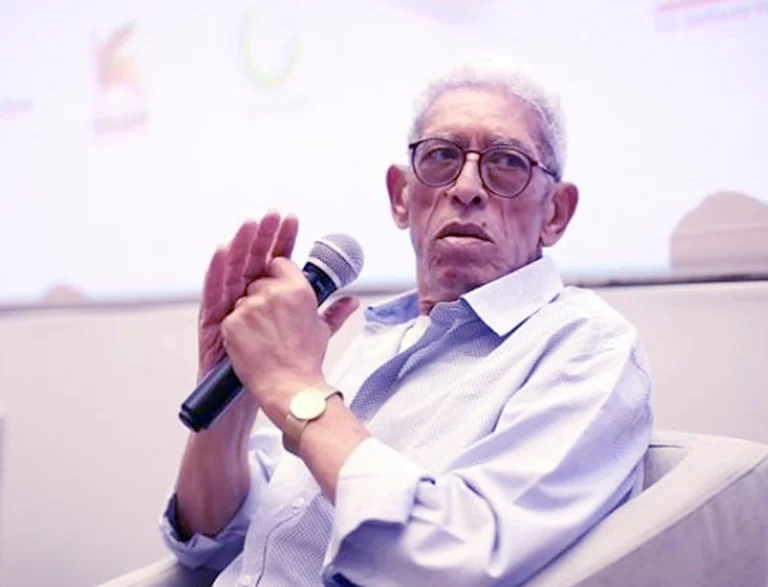
Cairo, Egypt – Grief has descended upon the artistic and cultural community in Egypt and the Arab world today, Saturday, with the passing of the great film director Daoud Abdel Sayed,
one of the pillars of “New Realism” in Egyptian cinema,
and the owner of unique philosophical and social visions.
Departure announcement
The journalist and writer Karima Kamal, the wife of the late director,
announced the news of his death via her official Facebook account.
She wrote in moving words: “Today the dearest thing I had left me…
my husband and my love, Dawood Abdel Sayed.”
An exceptional cinematic career
Daoud Abdel Sayed is a director of a special kind; his films were not merely observations of reality,
Rather, it was a dive into the depths of the human soul and its existential questions,
and his career showcases bright milestones:
Beginnings and learning
He graduated from the Higher Institute of Cinema in 1967,
and honed his talent by working as an assistant to senior directors;
He worked with the international director Youssef Chahine on the film
“The Land” and with Kamal El Sheikh on “The Man Who Lost His Shadow”.
Passion for documentary cinema
Before embarking on his journey in feature films, he produced documentary works
that captured the pulse of the street and the people.
Among them are “The Testament of a Wise Man on Village Affairs and Education”
and “On People, Prophets, and Artists”.
Narrative imprint
He directed a number of the most important classics of contemporary cinema
that changed the face of the seventh art, most notably:
The Vagabonds… his first full-length novel.
Kit Kat, in which he presented the immortal character of “Sheikh Hosni”.
Land of Fear: A Journey into the World of Crime and Identity.
Letters from the Sea… in which he embodied his own philosophy towards the city and memory.
A private school in directing
Daoud Abdel Sayed’s cinematic school was distinguished by its ability
to create a parallel world in which reality and imagination intertwine.
He was also known for his deliberate approach to choosing his works,
as he would not direct a film unless it addressed an issue or a question that troubled him.
This is what made his filmography – despite its small number –
among the most important in the history of Arab cinema.
Daoud Abdel Sayed passed away, leaving behind an inexhaustible artistic legacy of “Sea Messages,”
and a cinematic heritage that will remain a reference for future generations of filmmakers.