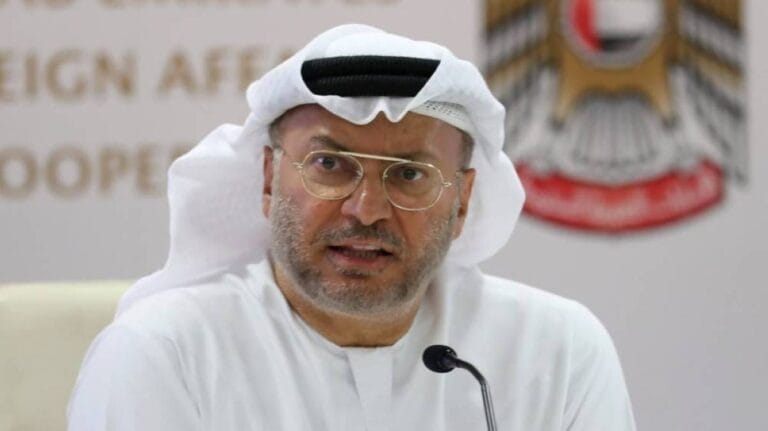
Abu Dhabi, UAE – Dr. Anwar Gargash, Diplomatic Advisor to the President of the UAE, affirmed that his country faced unprecedented challenges and intense attacks involving thousands of missiles and drones. He stated that this resulted in a “story of military success and national resilience” that demonstrated the efficiency of the state’s institutions. It also showcased the unity and strength of its people in the face of the serious geopolitical crises that the region has witnessed over the past seven months.
Remarkable defense efficiency and economic resilience
Gargash’s remarks came during a keynote address at the third annual Hili International Forum in Abu Dhabi. His speech highlighted the dangerous transformations underway in the Gulf and the wider Middle East, and their direct repercussions for regional and international security. He explained that over several weeks this year, Iran launched approximately 3,300 missiles and drones toward the UAE. The majority of these targeted civilian infrastructure but were successfully intercepted by highly efficient air defense systems. He affirmed that the UAE has consistently delivered on its promise that all citizens, residents, and visitors are safe and able to thrive and work within its borders.
Gargash emphasized that despite the war and security challenges, the UAE economy continued its steady growth. Non-oil foreign trade recorded a 13% increase during the first half of the year compared to the same period last year. This reflects the country’s strong resilience and demonstrates the ability of its development and strategic plans to move forward into the future.
Energy security and freedom of navigation in the Strait of Hormuz
In a related context, the diplomatic advisor warned that the repercussions of the conflict have extended beyond the immediate battlefields. They have affected ports, shipping lanes, global supply chains, energy markets, and food security. He asserted that closing shipping lanes or using them as a tool of coercion constitutes a serious and unacceptable threat to the global economy, energy security, and international trade. He also cautioned against allowing the status quo in the Strait of Hormuz to be altered by force, given its central role in the global economy. The strait carries approximately a quarter of the world’s seaborne oil trade and a significant portion of the world’s vital fertilizers, crucial for agriculture and food security.
He also stressed that freedom of navigation is not a concession or a principle to be renegotiated under pressure, but an established right based on international law. He warned that the world is paying a heavy price for the disruption of maritime shipping. He affirmed that targeting commercial vessels must have clear and firm consequences.
A strategic vision for dealing with Iran
Regarding relations with Tehran, Gargash explained that geography leaves no alternative to future engagement. However, he called for a clear distinction between “rebuilding a necessary, pragmatic relationship” and “rebuilding the trust that was shattered” within hours as a result of a premeditated war of choice waged against neighbors in flagrant violation of the principles of good neighborliness and international law. He also indicated that restoring the presumption of good faith could take years or even decades.
He noted that Arab, regional, and international responses have not yet risen to the level of the threat’s gravity or fully contained the crisis. He also stressed the urgent need for the Gulf states to translate their shared understanding of the Iranian challenge into a unified and effective response. He affirmed that strategic independence is not merely a slogan, but a rational choice that combines credible deterrence, reliance on national capabilities, and robust partnerships with international allies such as the United States. He clarified that this must be accompanied by a genuine commitment to dialogue and diplomacy.
Pillars of Sustainable Stability and the Heili Forum
Gargash concluded his remarks by outlining the pillars for the next phase of achieving sustainable regional stability. These pillars include achieving a serious and sustained de-escalation of tensions. They also include treating the Strait of Hormuz as an international waterway whose navigation must not be subject to coercion. Furthermore, they involve adopting a long-term diplomatic approach to address threats and provide credible security guarantees. This includes reaffirming the centrality of the nation-state and respecting its sovereignty. It also entails preventing decisions of war and peace from falling into the hands of militias and non-state actors. Finally, it includes establishing a clear and decisive path regarding the Iranian nuclear program, its verification mechanisms, and imposing deterrent consequences for non-compliance.
The third edition of the Hili International Forum commenced Sunday morning in Abu Dhabi at a pivotal moment in the history of the Middle East. Over two days, the forum addressed the latest developments and strategic options reshaping the Gulf and the world. It also explored the future of regional security, trade routes, and energy. The forum witnessed the participation of a high-level contingent of decision-makers, senior officials, thought leaders, and international experts.