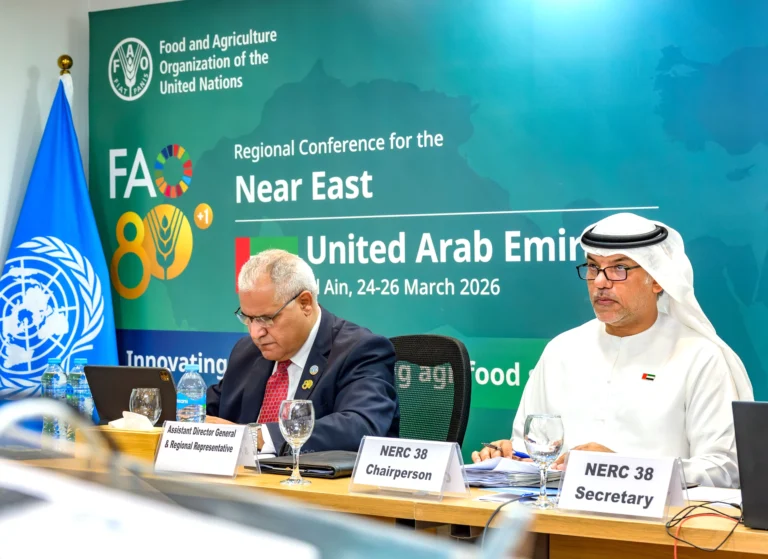
Abu Dhabi, UAE – The United Arab Emirates has announced its chairmanship of the 38th session of the Food and Agriculture Organization of the United Nations (FAO) Regional Conference for the Near East. It also announced that it will host the upcoming ministerial meeting on April 21 in Al Ain, with broad participation from agriculture ministers and representatives of member states.
Coordination of regional priorities
This year’s conference is being held under the theme “Innovation for Transforming Agricultural and Food Systems.” It serves as a key platform for coordinating shared priorities and strengthening regional cooperation in the coming phase. This is particularly important given the growing challenges to food security.
The preparatory meeting of senior officials saw the participation of more than 200 representatives from Near East and North African countries. Technical and policy issues were discussed, and recommendations were drafted to be submitted to the ministerial meeting for adoption.
Addressing food security challenges
Discussions focused on several vital issues, including strengthening supply chains, diversifying food sources, and improving logistics. In addition, innovative solutions and modern technologies were employed to support agricultural production.
Participants emphasized that the region faces increasing challenges, including climate change, water scarcity, and geopolitical pressures. This necessitates coordinated and rapid action to ensure the sustainability of food systems and safeguard food security.
Innovation and technology are at the forefront of solutions.
Official statements during the meeting emphasized the importance of innovation and technology in developing the agricultural sector and enhancing its resilience to crises. They also stressed the need to intensify regional and international efforts to achieve sustainability.
Furthermore, the UAE’s commitment to supporting the transition to more efficient and sustainable agricultural and food systems was reaffirmed, through the application of modern technologies and the strengthening of partnerships with international organizations and sister nations. This contributes to addressing future challenges and ensuring food security for future generations.