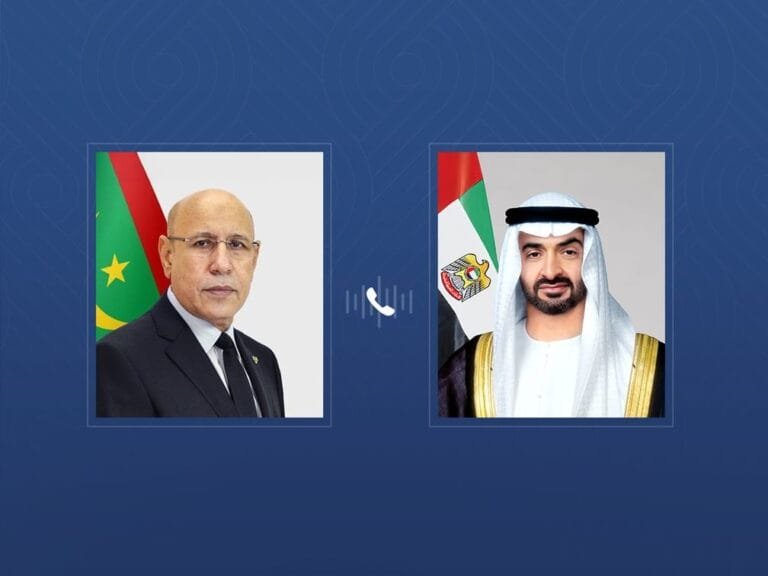
Abu Dhabi, UAE – UAE President Sheikh Mohamed bin Zayed Al Nahyan discussed the military and security developments in the region during a phone call he received on Thursday from Mauritanian President Mohamed Ould Cheikh Ghazouani. The call also addressed the repercussions of these developments on regional peace and security.
The two leaders discussed the latest developments in the region in light of the ongoing military escalation, as well as its potential impact on regional and international stability.
They also emphasized the importance of intensifying diplomatic efforts to contain tensions and prevent the conflict from spreading.
Condemnation of the attack on the UAE consulate
During the call, the Mauritanian president expressed his country’s condemnation of the attack targeting the UAE Consulate General in the Kurdistan Region of Iraq. He stated that targeting diplomatic missions constitutes a clear violation of international norms and laws that guarantee their protection.
President Ghazouani emphasized that such attacks represent a serious threat to diplomatic work and international relations. Furthermore, he stressed the need to respect international rules protecting diplomatic premises and official missions.
Mauritanian solidarity with the UAE
The Mauritanian president reiterated his country’s condemnation of the Iranian attacks targeting the territory of the United Arab Emirates and several other brotherly nations in the region.
He affirmed Mauritania’s full solidarity with the UAE in its defense of its sovereignty, security, and stability.
He indicated that his country supports all efforts aimed at protecting the security
and stability of nations in the face of threats.
He also clarified that these threats directly affect Mauritania’s sovereignty and territorial integrity.
Call for calm and de-escalation
During the call, both sides emphasized the importance of working to reduce tensions in the region.
They also stressed the importance of pushing for de-escalation and halting military operations to prevent further threats to regional and international security and stability.
They further emphasized the necessity of prioritizing diplomatic solutions and dialogue in addressing current crises.
This contributes to maintaining stability in the region and spares it further tensions and security and economic repercussions.