Abu Dhabi, UAE – In a strategic move that reshapes the landscape of economic cooperation between the Gulf region and Southeast Asia, the United Arab Emirates and the Republic of the Philippines announced a Comprehensive Economic Partnership Agreement (CEPA). This agreement represents a new cornerstone in the UAE’s efforts to double its non-oil foreign trade and solidify its position as a key player in emerging Asian markets.
The outlines of this partnership began to take shape as the UAE sought to diversify its international partnerships. The agreement opens the door to significant trade and investment flows between the two countries. By reducing customs barriers and facilitating the movement of goods and services, the agreement grants UAE companies preferential access to one of the fastest-growing economies in ASEAN: the Philippine market, characterized by a young and growing consumer base.
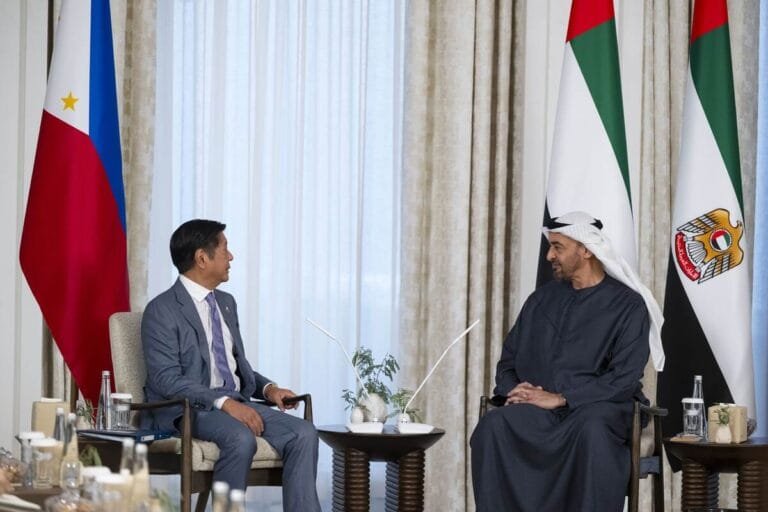
In the context of the historical significance of this step, the Manila Standard reported that the Free Trade Agreement signed today by the UAE and the Philippines, in the presence of His Highness the President of the UAE and his Philippine counterpart, Ferdinand Marcos Jr., is the first of its kind that the Philippines has concluded with a Middle Eastern country. It will also ensure an increase in the flow of investments, exports, and businesses between the two countries.
On the investment front, the agreement extends to vital sectors such as food security, renewable energy, logistics, and digital innovation. The UAE aims to leverage the Philippines’ geographic location as a gateway to East Asian markets, while the Philippines benefits from the UAE’s world-class infrastructure and the financial capabilities of its leading sovereign wealth funds.
With the entry into force of this agreement, relations between Abu Dhabi and Manila enter a phase of economic integration. This not only serves the interests of both countries but also enhances the resilience of the global economy by creating new, efficient, and sustainable trade corridors. It underscores that Asia remains a key destination in the UAE’s future ambitions.