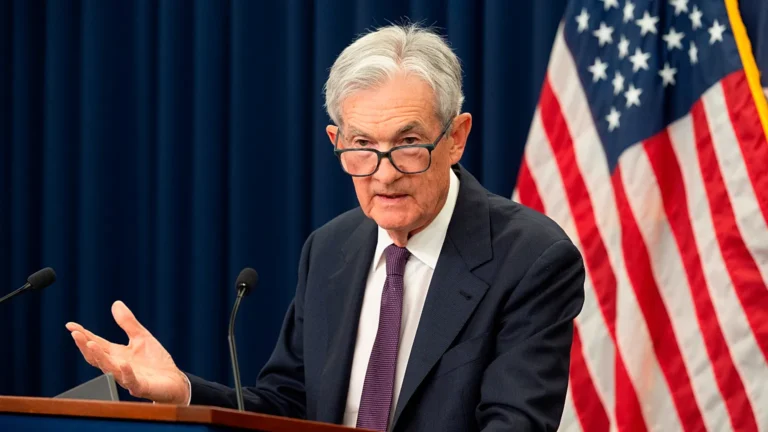
Washington, DC – Jerome Powell, chairman of the US Federal Reserve, is preparing to leave his post after nearly eight years at the helm of the world’s most important monetary institution. This period has been described as one of the most turbulent in modern economic history, marked by a succession of global crises and drastic monetary policy shifts.
During his tenure, Powell faced unprecedented challenges, beginning with the fallout from the US-China trade war. His term also saw the COVID-19 pandemic, which plunged the global economy into a severe recession. Furthermore, his leadership was characterized by soaring inflation, forcing the Fed to implement interest rate hikes at a pace unseen in decades.
His tenure was also marked by repeated political pressure from successive US administrations, ranging from calls for looser monetary policy to stimulate growth to opposing warnings about the risks of inflation and the stability of financial markets. Consequently, the Federal Reserve’s decisions during his time in office became a constant source of debate within economic circles.
His departure is expected to usher in a new era in US monetary policy. This is particularly relevant given the ongoing challenges related to public debt, slowing growth, and geopolitical tensions that continue to cast a shadow over the global economy.