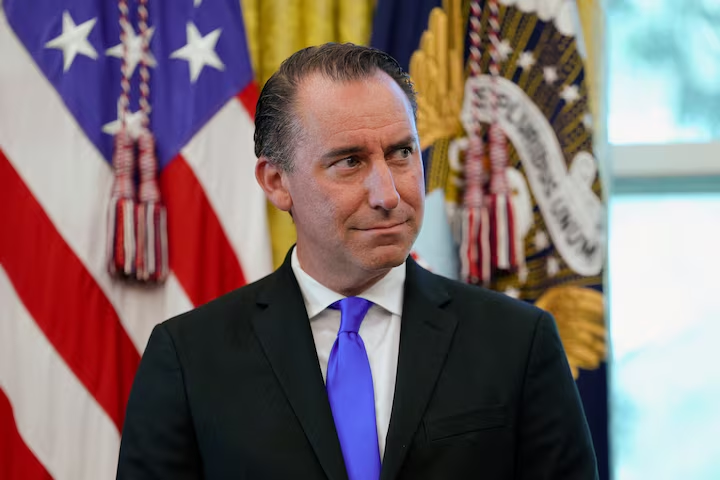
Washington, DC – In a significant geopolitical and economic shift, the White House announced that Jarrod Agen, director of the National Council for Energy Dominance, will travel to Venezuela on Thursday, April 30, 2026. During the visit, he will hold high-level meetings with government officials and executives in the oil and mining sectors. The goal is to forge an unprecedented economic partnership between the two countries.
Rebuilding investment ties
White House spokeswoman Taylor Rogers stated that the United States and Venezuela are currently working to restore their economic relations and facilitate investments that will benefit both nations. This visit, revealed by Politico, is intended to finalize memoranda of understanding that will pave the way for international oil and mining companies to resume operations in Venezuela. This comes after years of estrangement and nationalization.
A roadmap for increasing supplies
While the agreements facilitated by the Trump administration will not immediately boost production, they lay the groundwork for increased Venezuelan oil exports in the coming years. This opening also includes projects in the gold, aluminum, and coal sectors, with arrangements in place to ensure that production is supplied directly to U.S. markets.
The meetings will be attended by industry giants, most notably Hunt Oil (Dallas), Spain’s Repsol, and Italy’s Eni. Also participating are the US energy services company Halliburton and Venezuela’s state-owned petrochemical company.
A new political context in Caracas
These economic moves coincide with sharp structural changes within Venezuela’s power structure. Vice President Delcy Rodríguez has initiated a broad process of dismissing officials close to Nicolás Maduro and dismantling former networks of influence. Observers believe Rodríguez is leading a redistribution of power that aligns with international requirements for attracting foreign investment. This comes after a long period of reluctance among global companies to enter the Venezuelan market due to the risks of nationalization and the lack of legal guarantees.
With this rapprochement, Washington seeks to secure alternative energy resources amid global turmoil. In return, Caracas hopes to rescue its ailing economy through American and European investment.