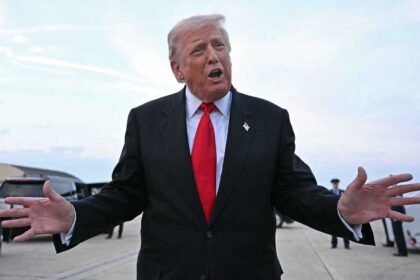
Washington, DC – In a move reflecting his commitment to his “America First” trade policy, US President Donald Trump issued a series of tariffs on Thursday, described as revolutionary, targeting the pharmaceutical and metals sectors. The tariffs come on the first anniversary of what Trump calls “Liberation Day,” the date that marked the start of his trade wars with most of Washington’s partners last year, which have reshuffled global supply chains.
Extreme pressure on pharmaceutical companies
Trump’s most significant decision aims to force global pharmaceutical companies to relocate their manufacturing facilities to the United States. Under the new policy, hefty tariffs of up to 100% will be imposed on drugs manufactured abroad unless the countries of origin enter into special trade agreements or the companies commit to building factories on American soil. A senior US official explained that large companies have been given 120 days to submit “production relocation plans” before the tariffs take effect, while smaller companies have been given 180 days. The official added, “We expect the vast majority of internationally patented drugs to be manufactured within our borders.” As an incentive, the tariffs will be reduced to 20% for companies that commit to completing their factories before the end of Trump’s second presidential term.
Restructuring of metal fees
In parallel with the pharmaceuticals issue, Trump ordered a restructuring of the metals tariff system to combat what he called “artificial price manipulation.” A 25% tariff will be levied on the full value of finished products containing significant amounts of steel, aluminum, and copper, replacing the previous complex system that calculated tariffs based solely on the weight of the metals. Despite concerns about increased costs, US officials have ruled out any direct impact on end consumer prices.
Exceptions and special agreements
Despite the severity of the measures, the executive order included exceptions for Washington’s major trading partners. Medicines from the European Union, Japan, South Korea, and Switzerland will be subject to reduced tariffs of 15% under previous agreements. Britain, for its part, secured an agreement allowing its medicines to access the US market duty-free for three years as part of a broader trade deal. These moves come as Trump attempts to circumvent Supreme Court rulings issued last February against some of his global tariffs, underscoring his determination to use tariffs as a tool of political and economic pressure to reshape the global trading system to serve the American industrial agenda.