Washington, DC – As military fronts rage across the Middle East, international economic reports have revealed another facet of the conflict. The United States has emerged as one of the biggest beneficiaries of the dramatic surge in global energy prices. According to estimates by the investment bank Jefferies, reported by the Financial Times, the war being waged by Washington and Israel against Iran has created a new pricing reality. This reality is working in the US Treasury’s favor.
Record profits and shocking forecasts
With oil prices surpassing $100 a barrel, data from energy research firm Rystad Energy indicates that if prices remain at these high levels throughout the year, US companies will reap additional profits of approximately $63.4 billion from crude oil production. Brent crude has seen historic gains over the past two weeks, reaching nearly $120 a barrel at the height of the price surge. This surge was driven by market fears of a prolonged disruption to global energy supplies.
Trump: “We’re making a lot of money.”
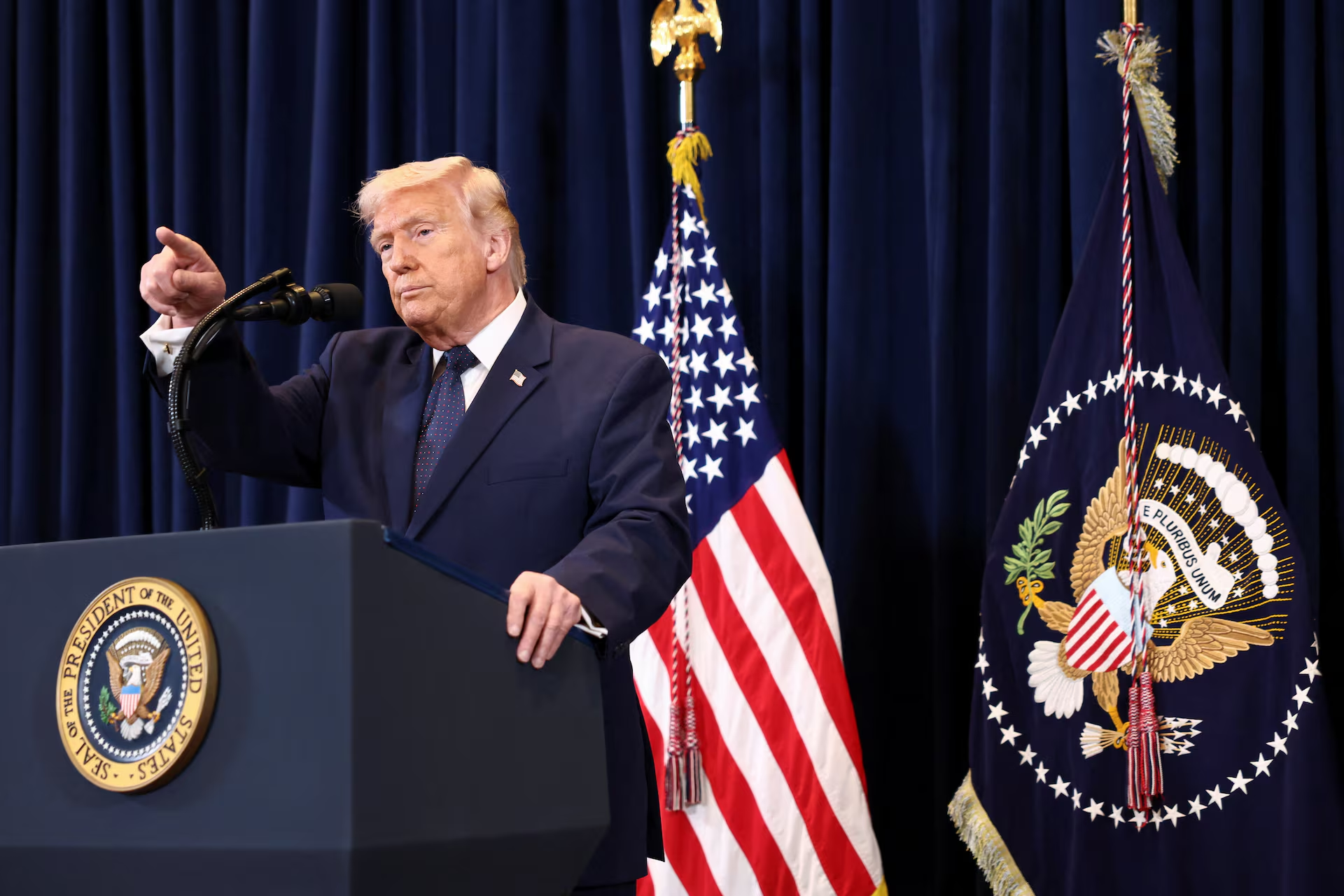
For his part, US President Donald Trump adopted a frank and controversial tone regarding the crisis, writing on his Truth Social platform: “The United States is the world’s largest producer of oil by far, so when oil prices go up, we make a lot of money.” With this comment, Trump attempted to deflect attention from inflationary pressures. He also portrayed the price hikes as an economic strength that reinforces Washington’s position as a dominant power in the energy market.
The Strait of Hormuz crisis and the burden of inflation
On the other hand, The Wall Street Journal warned that this surge is weighing heavily on the domestic economy, with gasoline, diesel, and basic service prices skyrocketing.
The Trump administration faces a complex challenge in presenting a plan to reopen the vital Strait of Hormuz. The strait is currently under near-total closure to American and Israeli shipping, according to Iranian claims. The Guardian reports that more than a thousand cargo ships, mostly oil and gas tankers, are stranded or prevented from passing through. In this context, The Economist quoted analysts with dire predictions: if the strait remains closed until the end of this month, oil prices could explode, reaching $150 or even $200 a barrel. This could upend the global economy. Despite these risks, the Financial Times insists that Washington remains relatively safe. Its enormous production capacity allows it to shield its economy from the worst consequences that could befall energy-importing nations.