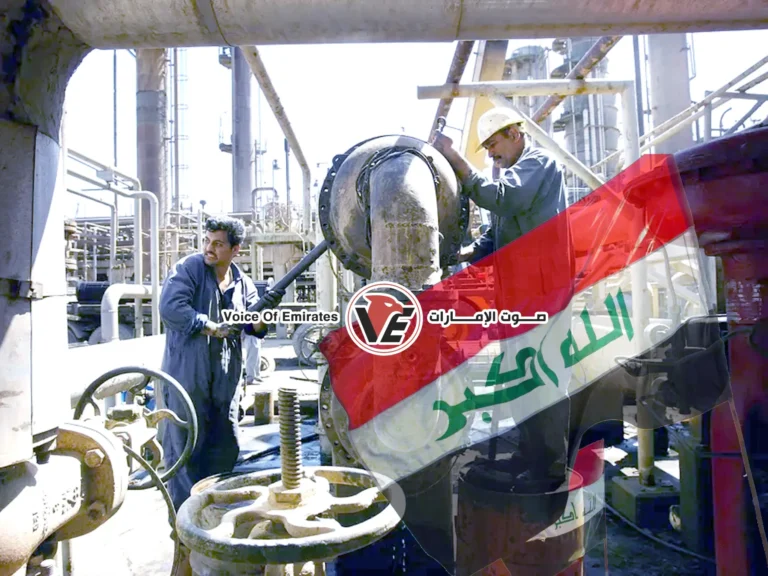
Baghdad, Iraq – Bloomberg reported that Iraq has lowered the selling price of its Basra Medium crude to Asian customers in February.
This move reflects a similar trend among several major producers in the region, most notably Saudi Arabia,
to enhance their competitiveness in the world’s largest oil market.
According to the pricing list issued by Iraq’s state-owned oil marketing company, SOMO,
the price of Basra Medium crude was set at a discount of $1.30 per barrel compared to the regional benchmark.
This discount was $1.05 per barrel in January, indicating a widening of the price reductions aimed at Asian buyers.
Stability of pricing policy
In contrast, Iraq kept the price of its Basra Heavy crude unchanged.
It continued to be sold at a discount of $3.60 per barrel to the same regional benchmark.
This reflects the stability of the pricing policy for this type of crude during the current period.
This move comes amid broader shifts in the energy market.
Saudi Arabia had previously cut prices for its main oil exports to Asia in
an effort to maintain market share amid increasing competition.
These changes are driven by shifts in global demand, particularly from major Asian economies.
Observers believe that Iraq’s reduction of Basra Medium crude prices reflects
an accurate assessment of market developments.
This comes particularly in light of the challenges associated with global price volatility,
a slowdown in some demand indicators, and competition from alternative oil supplies from outside the Middle East region.
This move comes in the context of broader moves within the energy market,
as Saudi Arabia preceded it by reducing the prices of its main oil destined for Asia,
in an attempt to maintain market share amid increasing competition
and changes in global demand levels, particularly from major Asian economies.
A careful reading of market developments
Observers believe that Iraq’s reduction of Basra Medium crude prices reflects an accurate reading of market developments,
especially in light of the challenges associated with global price fluctuations,
the slowdown in some demand indicators, and competition from alternative oil supplies from outside the Middle East region.
Basra crude, in both its medium and heavy grades, is among Iraq’s most important oil exports.
Asian markets, particularly China, India, and South Korea, are the primary destinations for these exports.
Through this pricing policy, Baghdad seeks to ensure the stability of its oil export flows.
It also aims to enhance its attractiveness to Asian buyers in a market environment highly sensitive to price fluctuations.
These moves underscore Iraq’s continued reliance on flexible pricing mechanisms as a means of maintaining its position among the top oil suppliers to Asia.
This occurs against the backdrop of a rapidly evolving global energy landscape.