
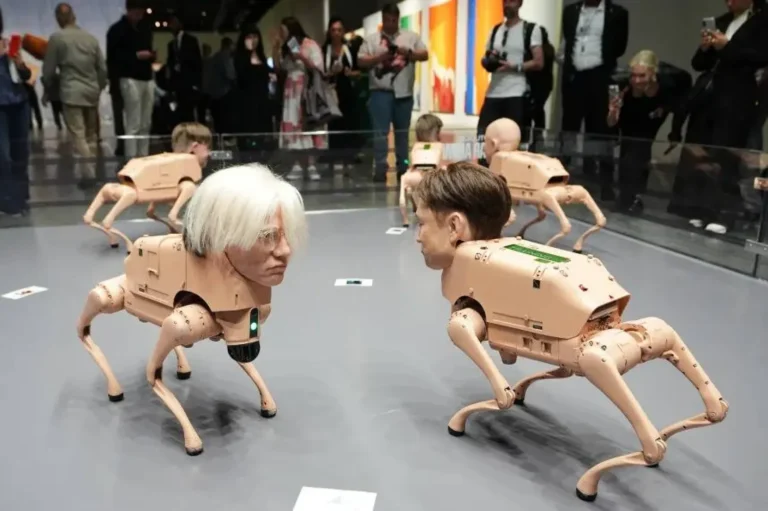
Miami, USA – Art Basel Miami Beach featured an unconventional art display that astonished visitors, with a number of robotic dogs equipped with silicone faces mimicking the features of global figures such as Elon Musk, Jeff Bezos and Mark Zuckerberg.
The robots roamed within a designated area, taking pictures of the surroundings and making sarcastic gestures, while controversially printing small works of art.
Digital artist Pebble (Mike Winkleman) unveiled the work under the title “Ordinary Animals”.
Art prints inspired by billionaire figures
Each robot produced artistic prints with a visual style that reflected the personality associated with its face.
Some of the works carried the spirit of Warhol’s pop art, while others appeared in a cubist style inspired by Picasso.
Some of the pieces included QR codes related to the world of NFTs.
Bibble explained that the aim of the work is to criticize the growing influence of technology, digital platforms and algorithms in shaping public consciousness, at the expense of the traditional role of artists.
The work was very well received, and most copies were sold during the special VIP screening, according to Interesting Engineering.
Digital art that breaks boundaries and raises questions
The installation “Ordinary Animals” was considered an artistic experiment that transcended traditional boundaries, combining robots, satire, and social commentary in the form of a live performance.
One trader described the work as exposing “cultural and moral corruption,” asserting that it attracts audiences despite the simplicity of the idea behind the shiny technological appearance.
The robots also displayed deliberate, seemingly unsmooth movement, creating a contrast between the realistic faces of the billionaires and the bodies of the mechanical machines.
Digital satire: Cameras monitor and print flows
The robots would periodically stop to scan the area, taking pictures that they would send to advanced algorithms that would generate the artwork, before producing it in a satirical style that mimicked the ease of producing digital content and the speed of its consumption.
Bebel explained that the work reflects his concerns about the influence of billionaires, artificial intelligence, and major platforms in shaping people’s perception of reality, an influence that may exceed that of journalism or traditional arts.
When the robot with Zuckerberg’s face produced its own image, visitors reacted noticeably—even though most of them watched the scene via their phone screens, according to Art News.