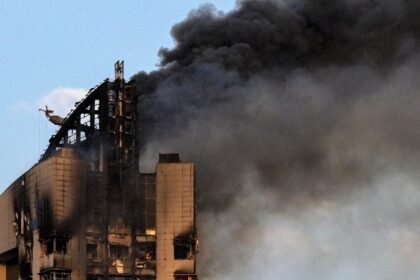
Voice of the Emirates – The Middle East has entered a new phase of military escalation, with the increasing likelihood of a US ground intervention in Iran. This comes as the deadline set by President Donald Trump for Tehran to respond to international demands approaches.
With the continued ambiguity surrounding the negotiation process and the escalating strategic military buildup in the Gulf and surrounding bases, field data indicates that US military operations have moved beyond the stage of “air deterrence.” They have shifted to a more dangerous and violent phase involving a ground invasion. This represents a qualitative shift in US military operations.
Pentagon “closed-door” plans
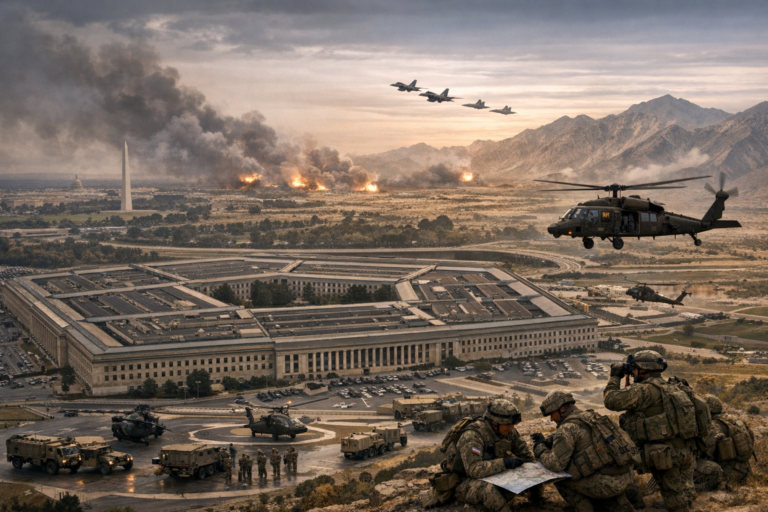
كشفت صحيفة “واشنطن بوست” الأمريكية، نقلا عن مسؤولين رفيعي المستوى في الإدارة الأمريكية، أن وزارة الدفاع (البنتاغون) وضعت بالفعل خططا تفصيلية وجداول زمنية لعمليات برية محتملة داخل الأراضي الإيرانية. هذه الخطط، التي قد تمتد لعدة أسابيع متواصلة من القتال العنيف، تعكس تحولا جذريا في الاستراتيجية الأمريكية التي بدأت قبل خمسة أسابيع بضربات جراحية. لكنها اليوم تتأهب لاجتياح قد يعيد رسم خارطة النفوذ العالمي. وفقا للمعلومات المسربة، فإن السيناريوهات الموضوعة تتجاوز القصف التقليدي إلى توظيف قوات العمليات الخاصة (Special Forces) في مهام استهداف دقيقة خلف خطوط العدو. كما تتضمن عمليات تخريبية سرية داخل المنشآت الحصينة في العمق الإيراني. وصولا إلى نشر قوات المشاة التقليدية للسيطرة على نقاط استراتيجية.
Military buildup: The 82nd Division and the Marines are at the forefront.
The Trump administration didn’t just plan on paper; it began actively moving military pieces, deploying fully equipped Marine Corps combat units to strategic locations near the Iranian coast.
U.S. Central Command announced the arrival of U.S. sailors and Marines aboard the USS Tripoli (LHA 7) in its area of responsibility.
The amphibious assault ship America serves as the flagship for the Tripoli Amphibious Readiness Group/31st Marine Expeditionary Unit. This unit comprises approximately 3,500 sailors and Marines, along with transport aircraft, attack fighters, amphibious assault capabilities, and tactical assets.
Orders were also issued to move thousands of troops from the 82nd Airborne Division, considered the spearhead of the U.S. military and its fastest-response unit to major crises worldwide. Despite this buildup, sources indicate that the final decision still rests with President Trump. He is balancing his ambitions to achieve a “decisive victory” with fears of sinking into a new quagmire similar to the Iraqi and Afghan experiences.
The three paths: How will the ground war begin?
Military analysts believe that any ground operation will not be haphazard, but will follow one of the following paths:
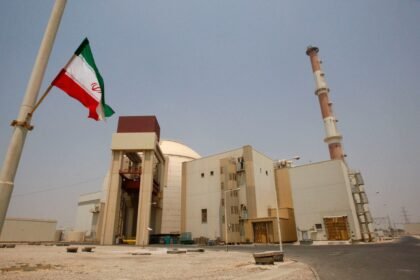
A surgical (limited) scenario relying entirely on elite forces to strike specific centers of gravity (such as the Natanz reactor or ballistic missile bases), followed by a rapid withdrawal to avoid a protracted war of attrition.
The expanded “buffer zone” scenario aims to control strategic border areas or vital islands (such as Kharg Island in the Persian Gulf) to cut off Tehran’s maritime reach and secure energy routes. This implies a troop presence for indefinite periods.
The decisive scenario is a comprehensive attack aimed at dismantling the Revolutionary Guard’s military structure and shifting the internal balance of power. This option is the most costly and requires the greatest manpower and international support.
Repercussions: A geopolitical and economic earthquake
A ground invasion cannot be viewed as an isolated military event; rather, it is a “detonator” for a complex web of crises. US forces would face a regular army exceeding 500,000 troops, supported by the Revolutionary Guard militias and the Quds Force. Furthermore, the rugged terrain would make a ground advance a logistical nightmare. Tehran also possesses a network of influence stretching from Baghdad to Beirut and Sana’a. This means that a single shot fired in Tehran would likely trigger explosions in multiple regional capitals and pose a direct threat to the security of Israel and the Gulf states. Moreover, Tehran’s continued use of the weapon of strangling the global economy by closing the Strait of Hormuz, through which more than 20% of the world’s oil passes, would immediately lead to a dramatic surge in energy prices. This could push the global economy into a severe recession. Strategic assessments indicate that Russia and China might not stand idly by in the face of Iran’s collapse. Consequently, this could transform the confrontation into an international diplomatic crisis reminiscent of the Cold War.
Is it a “coup de grâce” or a “strategic trap”?
The fundamental question remains: Will Trump dare to pull the trigger? Observers believe that Trump, known for his brinkmanship, might use these plans as a tool of maximum pressure to force Tehran to sign a new agreement on his terms, without firing a single shot. However, the dynamics on the ground and intelligence indicating that two-thirds of Iran’s arsenal remains intact could impose an irreversible military reality on him. The region today stands on the precipice. The next few weeks will not only determine the fate of the regime in Tehran but will also shape the new world order for decades to come. It will be either a major historical settlement or a regional explosion that will forever alter the face of the Middle East.