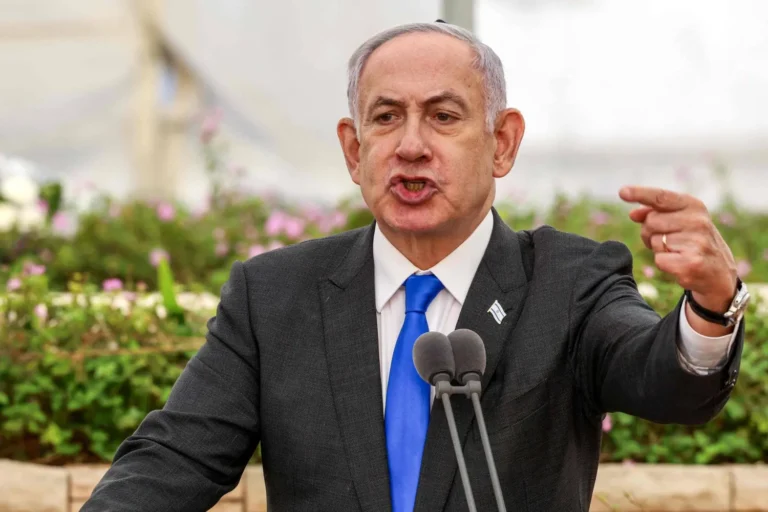
Tel Aviv, Israel – In a speech reflecting Tel Aviv’s insistence on separating the tracks of the regional conflict, Israeli Prime Minister Benjamin Netanyahu affirmed on Thursday that Israel will continue its military operations against Hezbollah “wherever necessary.” He also stressed that the temporary truce reached between the United States and Iran does not apply to the Lebanese arena.
These statements come a day after the most intense wave of airstrikes Lebanon has witnessed in weeks. These strikes resulted in hundreds of casualties and widespread destruction of Hezbollah’s infrastructure.
“Strength, precision, and determination” in targeting the party
On his official Twitter account, Netanyahu posted a resolute message: “We continue to strike Hezbollah with force, precision, and determination,” adding that the military operations carried out last night targeted vital infrastructure in the heart of Beirut’s southern suburbs and southern Lebanon.
Netanyahu emphasized that the Israeli message is clear and direct: “Anyone who commits acts of aggression against Israeli civilians will be struck.” He vowed to continue these strikes until the strategic goal of “restoring complete security to the residents of northern Israel” is achieved.
The assassination of “Harshi” and the targeting of the Litani crossings
Netanyahu’s remarks coincided with the Israeli military’s announcement of the assassination of Ali Youssef Harshi, the personal secretary of Hezbollah Secretary-General Naim Qassem, in a “surgical” airstrike in Beirut.
Netanyahu praised the field results achieved by the Air Force and the 98th Division, noting that the army had managed to destroy strategic crossings over the Litani River. These crossings had been used to transport thousands of missiles and other military equipment. In addition, the army bombed dozens of warehouses and command centers.
Middle East transformations and the exception of Lebanon
In his televised address, Netanyahu asserted that Israel had “changed the face of the Middle East” to the benefit of its national security. He also emphasized that Israel would not allow the US-Iranian ceasefire agreement to tie its hands in confronting what he described as the “direct threat” from Lebanon.
Observers believe that Netanyahu’s insistence on continuing the fighting in Lebanon is placing the ceasefire agreement between Washington and Tehran under considerable pressure, especially given the warnings from the Iranian Revolutionary Guard and the European demands to include Beirut in any future truce. This makes the Saturday talks in Islamabad a true test of the international diplomacy’s ability to curb Israel’s unilateral escalation.