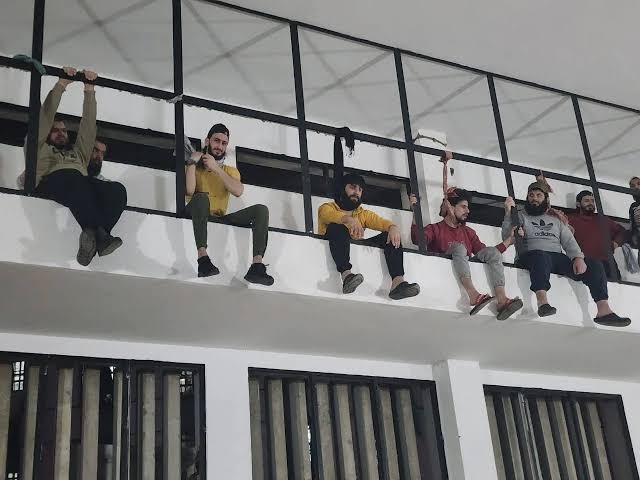
Beirut, Lebanon—Dozens of Syrian prisoners held at Lebanon’s Roumieh Central Prison staged an angry protest to express their strong opposition to the decision to suspend the general amnesty law that had previously covered them. The protest took place in the courtyard of the prison’s “Building B” following congregational prayers. Participants held banners and chanted slogans demanding urgent and immediate intervention by Lebanese authorities. They also called for a fundamental solution to their humanitarian and legal crisis and an end to their ongoing suffering.
Scathing criticism of the legal challenge and accusations with political overtones.
The protesting prisoners leveled harsh criticism at Lebanese MP and Free Patriotic Movement leader Gebran Bassil for his role in challenging the law. They viewed this move as having political and sectarian undertones that jeopardize their future. The protesters also demanded that official authorities “not obstruct the law” and appealed to Lebanon’s top leaders to swiftly resolve this sensitive issue. Chanting slogans such as “Oh God, Oh Guardian, we have been wronged because of Bassil” and “Listen, leaders of Lebanon, we have been wronged because of Gebran,” they expressed fears that the opportunity for release or sentence reduction might be lost.
Background to the Constitutional Ruling and the Prison Overcrowding Crisis
It is worth noting that the Lebanese Constitutional Council issued an official decision to suspend the implementation of the contested law, which concerns granting a general amnesty and exceptionally reducing the duration of certain sentences. This development occurred just weeks after the Lebanese Parliament passed the general amnesty law, following years of complex political and legal debates regarding the crimes covered and the categories of beneficiaries. These protests once again highlight the issue of prisons in Lebanon—particularly Roumieh Prison, the country’s largest, which suffers from chronic overcrowding. Consequently, the situation of Syrian detainees has become a highly complex humanitarian and legal issue that demands urgent attention to avert any potential escalation.