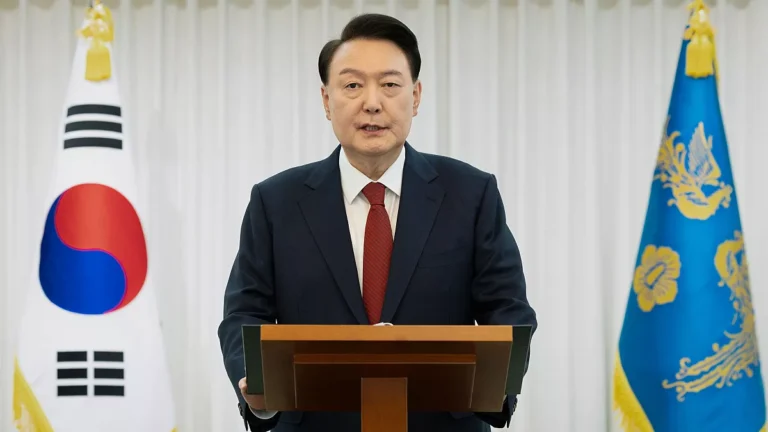
Seoul, South Korea – The Seoul Central District Court on Friday handed down a landmark 30-year prison sentence to former South Korean President Yun Suk-yeol and his former defense minister Kim Yong-hyun after convicting them in a highly sensitive security case. The case alleges that Yun ordered drone flights over the North Korean capital, Pyongyang, in 2024 to escalate military tensions and justify the imposition of martial law domestically.
The same court had previously sentenced Yun to life imprisonment after convicting him of high rebellion for briefly imposing martial law in December 2024. Thus, the former president faces a series of harsh judicial sentences and historic prosecutions.
Details of the drone and balloon crisis
North Korea officially accused Seoul of flying drones over Pyongyang to drop anti-regime propaganda leaflets on three separate occasions in October 2024.
The then-Defense Minister, Kim Yong-hyun, issued a vague denial. The Ministry of Defense later stated that it could neither confirm nor deny the allegations.
This led to a sharp escalation of border tensions between the two neighbors, but did not result in any direct military clashes.
In contrast, Yoon’s defense lawyers strongly criticized today’s verdict, arguing that the drone flights were merely a defensive response to the North’s sending of thousands of balloons laden with garbage and waste into the South earlier in 2024.
The lawyers argued that the conviction would undermine South Korea’s vital security interests. However, they did not immediately announce whether they would appeal the verdict.
The fall of martial law and the removal of the president
Yoon had plunged South Korea into an unprecedented political crisis when he sought to undermine civilian rule and democracy in January of last year. He was subsequently formally arrested, becoming the first South Korean president to be detained while still in office, and then completely removed from his post the following April by a parliamentary vote and constitutional approval.
The swift action of lawmakers from opposition parties and even from the ruling People’s Power party, coupled with overwhelming public support and massive street demonstrations, contributed to the rapid collapse of the coup attempt.
Despite the army’s adherence to the president’s orders and its storming of parliament, Yoon was ultimately forced to back down and sign a decree lifting martial law. All troops and military vehicles were then withdrawn from the parliament building, paving the way for his legal prosecution.