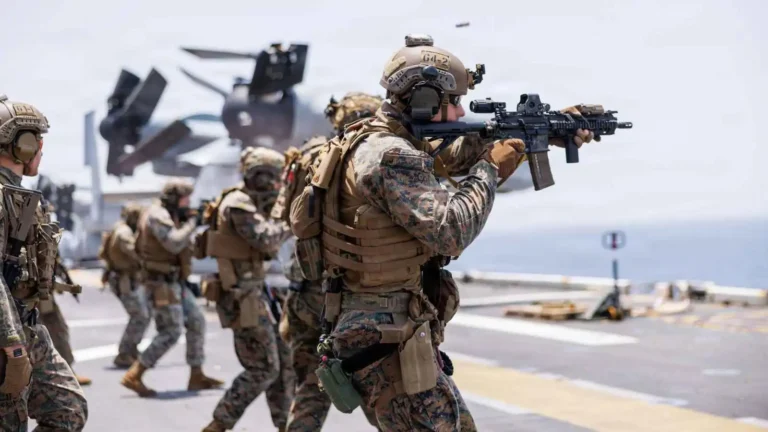
Washington, DC – In the most serious military escalation in decades, the US military announced it would begin implementing strict measures to control maritime traffic to and from Iranian ports and coastal areas, effective Monday.
This move follows the collapse of marathon talks hosted by the Pakistani capital, Islamabad, earlier this week. It puts the fragile ceasefire agreement, which has held for only two weeks, at imminent risk of collapse.
Details of the naval blockade and shipping lanes
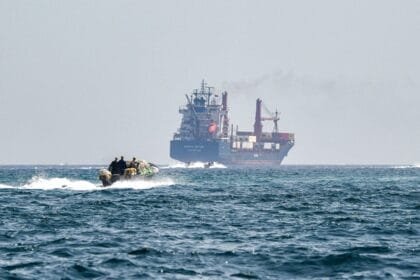
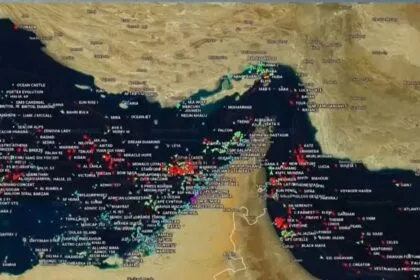
U.S. Central Command (CENTCOM) confirmed that the blockade would begin at 10:00 AM Eastern Time (2:00 PM GMT), emphasizing that the measures would be applied “neutrally” to all international vessels entering or leaving Iranian waters in the Persian Gulf and the Gulf of Oman.
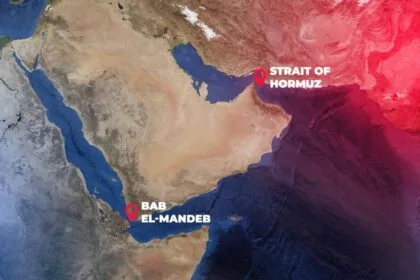
In an effort to minimize the impact of the blockade on global trade, the U.S. military clarified that vessels transiting the Strait of Hormuz bound for non-Iranian ports would not be impeded. It also advised commercial shipping to contact naval forces via Channel 16 to ensure safe passage.
Trump: No illegal tariffs, no landmines
For his part, President Donald Trump adopted a firm tone, warning that US forces would intercept any vessel in international waters found to have paid illegal “transit fees” to Iran.
“Any Iranian who fires on us or on peaceful vessels will be thrown into hell,” Trump wrote on social media, simultaneously announcing the start of operations to destroy the sea mines deployed by Tehran in the Strait of Hormuz, the waterway through which 20% of the world’s energy flows.
Fundamental disagreements in Islamabad
Although the Islamabad talks marked the first direct, high-level meeting between Washington and Tehran since 1979, a significant gap remained. A US official revealed that Iran rejected categorical demands to halt uranium enrichment and dismantle its nuclear facilities. It also refused to cease funding Hamas, Hezbollah, and the Houthis, and to fully reopen the Strait of Hormuz.
In response, Iranian Foreign Minister Abbas Araqchi expressed his disappointment, stating, “We were very close to a memorandum of understanding, but enmity breeds enmity,” and warning that Tehran would not accept American hegemony.
Economic repercussions and reactions on the ground
On the ground, supertankers began avoiding the waterway for fear of seizure or targeting, immediately triggering a surge in oil prices and the dollar in early trading on Monday, and a decline in Asian stocks.
In a rare admission, Trump told Fox News that gasoline prices could remain high until the midterm elections, hinting at the political ramifications of the conflict. While Trump believes that a “desperate” Iran will return to the negotiating table because “no one is stupid enough to insist on nuclear weapons without any bargaining chips,” Iranian President Masoud Pezeshkian, in a call with his Russian counterpart Vladimir Putin, asserted that his country would only accept a “balanced and fair agreement.” Meanwhile, the Revolutionary Guard warned that any approach to the Strait would be considered a violation of the ceasefire, raising the specter of a new round of fighting that could be the deadliest yet.