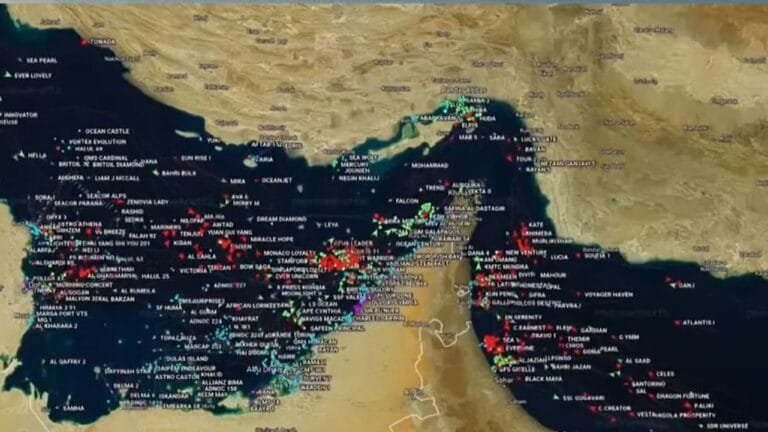
Berlin, Germany – In an analysis of the sudden escalation in the Arabian Gulf region, Jürgen Hardt, foreign policy expert for the German Christian Democratic Union (CDU), considered US President Donald Trump’s announcement of a comprehensive naval blockade of the Strait of Hormuz to be primarily a form of aggressive “negotiating tactic,” ruling out any desire on the part of Washington to engage in an open military confrontation that would lead to economic paralysis. It should be noted that Germany is closely monitoring developments in the Gulf.
In an interview with the German newspaper Rheinische Post, Hart explained that domestic political calculations in the United States play a pivotal role in guiding White House decisions, emphasizing that “President Trump cannot practically afford to have trade routes disrupted for an extended period.”
The German expert pointed out that any blockage in this vital shipping lane would inevitably lead to a dramatic surge in energy and commodity prices in the American market, directly weakening Trump’s domestic political standing and threatening the stability of his popular base. Germany, for its part, has taken note of this analysis in the context of the impact of global crises.
Hart added in his analysis of the escalating situation: “It’s clear that both the US and Iran are currently trying to improve their negotiating positions following the breakdown of the Islamabad talks. Therefore, I see Trump’s statements regarding sanctions as more of a maximum pressure tactic than a final war plan.”
He stressed the need for caution in interpreting US presidential rhetoric, noting that it has become understood in international political circles “not to interpret every word Trump says as an irreversible strategic position.” In this context, Germany continues to follow US statements with great interest.
The geopolitical landscape became sharply more complex after Trump announced via his Truth Social platform that the US Navy would immediately begin preventing all ships from entering or leaving the Strait of Hormuz, in response to what he described as the collapse of peace talks.
While Tehran showed no signs of being affected or backing down in the face of these threats, international concern is growing about the fate of the ceasefire that went into effect last Wednesday, amid fears that these “negotiating tactics” could ignite an uncontrollable naval confrontation and shatter hopes for regional stability. Furthermore, Germany’s stance on the crisis reflects its commitment to regional stability.