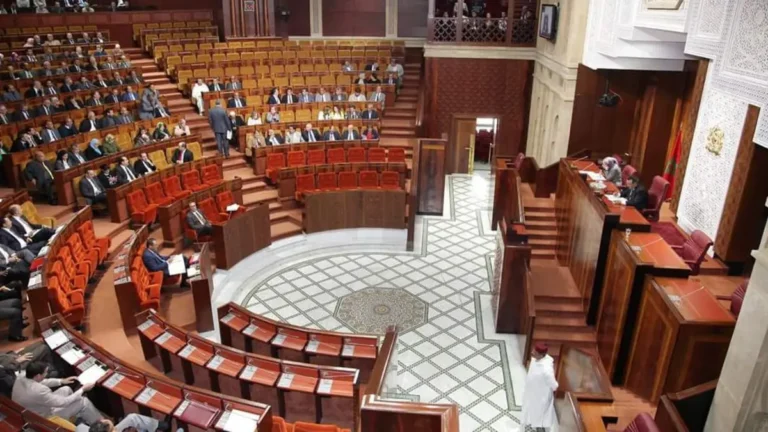
Rabat, Morocco – The Moroccan House of Representatives resumes its plenary sessions dedicated to oral questions today, Monday, April 13, in what is expected to be a heated session in which the government will face a barrage of criticism and questions related to its handling of current social and sectoral crises. This comes amidst public anticipation of the ministers’ responses to issues of national concern, particularly in light of the economic and climate challenges facing the Kingdom.
According to the official agenda seen by Al-Jarida, the session will include 36 questions, divided equally between 18 urgent and 18 regular questions. These questions concern six vital ministerial sectors, primarily infrastructure and water, energy transition, solidarity and social inclusion, as well as housing, youth, and sports. This session comes at a time of escalating parliamentary demands to accelerate the pace of progress on major projects launched by the state.
Nizar Baraka, the Minister of Equipment and Water, will bear the brunt of parliamentary questioning. He alone will face 12 questions, half of which are of an “immediate” and urgent nature. Most of these questions revolve around the Kingdom’s water policy in light of successive years of drought, and the fate of planned dams. In addition, the questions cover the delays in some major road projects and the rehabilitation of damaged infrastructure. These issues place the Ministry under pressure to meet deadlines.
For her part, Leila Benali, Minister of Energy Transition and Sustainable Development, will face a 10-question accountability test. These questions will focus primarily on the “energy sovereignty” strategy and the management of natural resources. These are topics of paramount strategic importance given the volatility of global energy prices. This also comes within the context of Morocco’s drive to strengthen its energy independence through renewable energy sources.
The session will also include a session with the Ministry of Solidarity, Social Integration, and Family, which will pose five questions concerning support for vulnerable groups and the implementation of direct social support programs. This will be followed by a questioning of the State Secretariat for Social Integration with four questions. Additionally, the State Secretariat for Housing will also be questioned with four questions, as members of parliament will inquire about the status of social housing projects and the simplification of urban planning procedures in rural and urban areas. Observers believe this session presents a genuine opportunity for Parliament to exercise its oversight role and alert the government to shortcomings in the implementation of public policies. This is particularly evident in areas suffering from a lack of basic services or delays in the completion of infrastructure projects, raising expectations that the discussions will be intense and directly address the core concerns of Moroccan citizens.