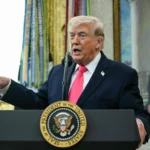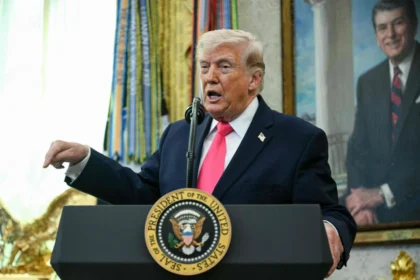
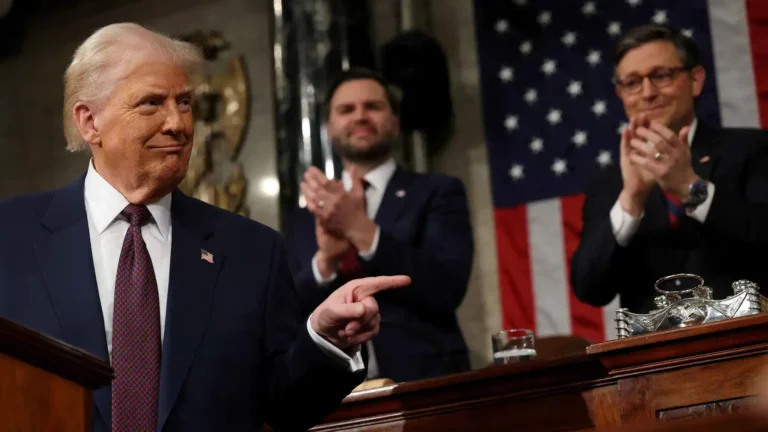
Washington, DC – In a strongly worded speech that redefined US foreign policy priorities in the Caribbean, President Donald Trump escalated his threats against the socialist regime in Havana. He also declared unequivocally that “Cuba is next.” This came during a speech at an investment forum in Miami. In that speech, Trump showcased his country’s military might, praising what he called Washington’s recent “military successes” in Venezuela.
The language of force and brandishing the “honor of conquest”
Speaking to a crowd of investors, Trump said, “I built this great military, and I said we’d never have to use it, but sometimes you do… and Cuba is next, by the way.” While the president did not elaborate on the nature of these next steps, his remarks follow hints he made last week about the possibility of “taking over the island.” He also told reporters that he believes he would have the “honor of taking over Cuba.” He has asserted on several occasions that the regime there is on the verge of collapse.
Economic strangulation and the fall of the Venezuelan ally
Under the Trump administration, Washington tightened its grip on the Cuban economy by restricting foreign currency inflows and energy supplies. These pressures intensified dramatically following the military and security operation carried out by US authorities last January. Notably, this operation resulted in the arrest of Venezuelan President Nicolás Maduro in the heart of Caracas and his transfer to the United States. This bold move deprived Havana of a vital economic lifeline; Venezuela had been the island’s most significant supporter and main supplier of oil. Cuba was thus left to face the consequences of the decades-long US trade embargo directly, without regional support.
Talks under fire
Despite this escalating rhetoric, both the US and Cuba have confirmed that official talks are taking place behind the scenes. Observers believe that Trump is employing a “maximum pressure” strategy and brandishing the threat of military action to force Havana to make radical concessions or accept a structural change in its political system.
These developments place the Caribbean region at a dangerous geopolitical crossroads. In this context, Washington appears determined to end the socialist presence in its sphere of influence, relying on what it considers a “successful model” in dealing with the Venezuelan situation.